



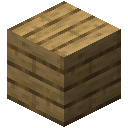
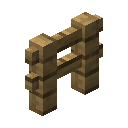
A fence provides a secure boundary that keeps livestock contained and prevents hostile mobs from entering your base. Crafting wooden fences requires four matching wood planks and two sticks arranged on a crafting table, which yields three fences per craft.

 3
Fence Crafting Recipes and Material Varieties
To craft any wooden fence, arrange four wood planks and two sticks in a 3x2 rectangular block across two rows of the crafting table grid. Place planks on the outer columns (slots 4 and 6 on the middle row, slots 7 and 9 on the bottom row) and sticks in the center column (slots 5 and 8). The recipe always produces three fences.
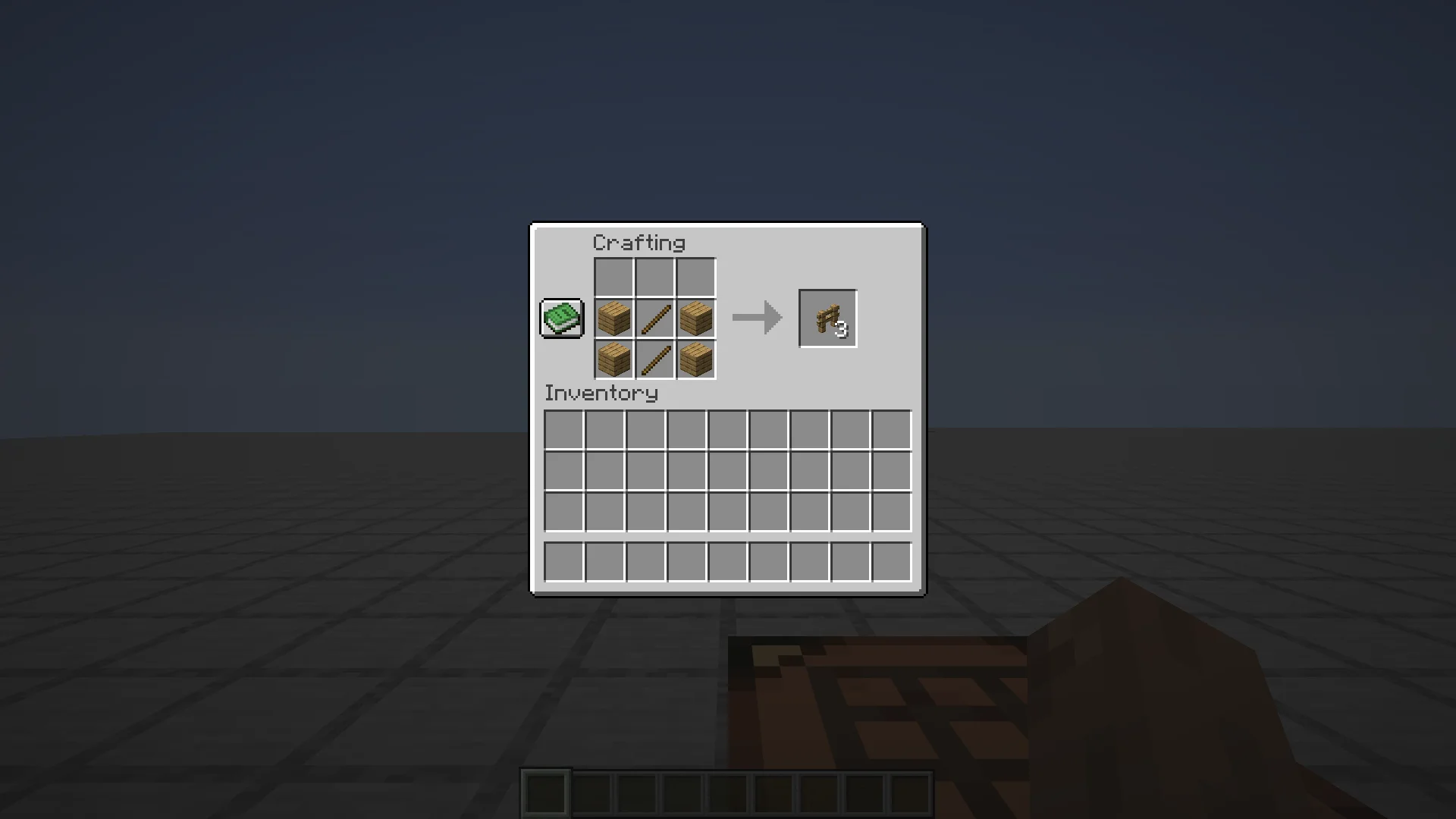
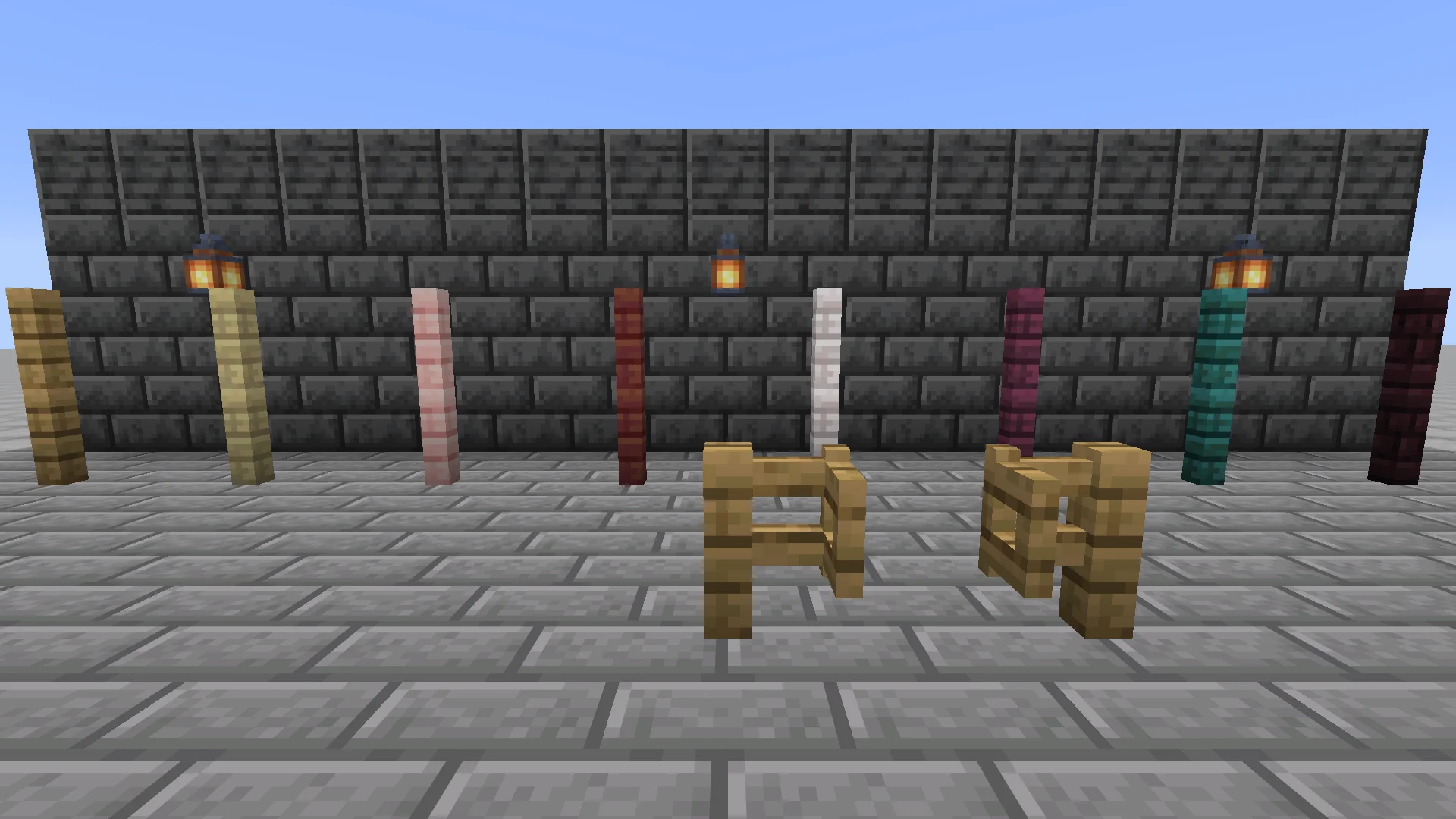
All four planks must belong to the identical wood species. You cannot combine oak and birch planks in the same grid. Minecraft 26.3 includes 13 wooden fence varieties:
- Overworld Woods: Oak, Spruce, Birch, Jungle, Acacia, Dark Oak, Pale Oak, and Poplar.
- Newer woods: Mangrove, Cherry, and Bamboo.
- Nether Stems: Crimson and Warped, crafted from crimson or warped planks. These fences do not burn.
Nether Brick Fence uses a distinct recipe pattern and ingredients:
- Nether Brick Fence: Place four Nether Bricks (blocks) on the outer columns and two Nether Brick items (individual smelted bricks) in the middle column. This recipe yields six Nether Brick Fences per craft. Nether brick fences do not burn.
To enter and leave your enclosure conveniently, craft a matching fence gate using an inverted pattern: two wood planks placed in the center column flanked by four sticks on the sides (stick, plank, stick across two rows). Each craft produces one fence gate.
| Fence Type | Crafting Ingredients | Yield | Flammable | Companion Fence Gate |
|---|---|---|---|---|
| Wooden Fences (13 types) | 4 Matching Planks + 2 Sticks | 3 Fences | Yes (Except Nether Stems) | Yes |
| Nether Brick Fence | 4 Nether Bricks Blocks + 2 Nether Brick Items | 6 Fences | No | None (wooden gates still connect) |
| Wooden Fence Gate (13 types) | 2 Matching Planks + 4 Sticks | 1 Gate | Yes (Except Nether Stems) | Self |
The 1.5-Block Collision Height and Mob Containment
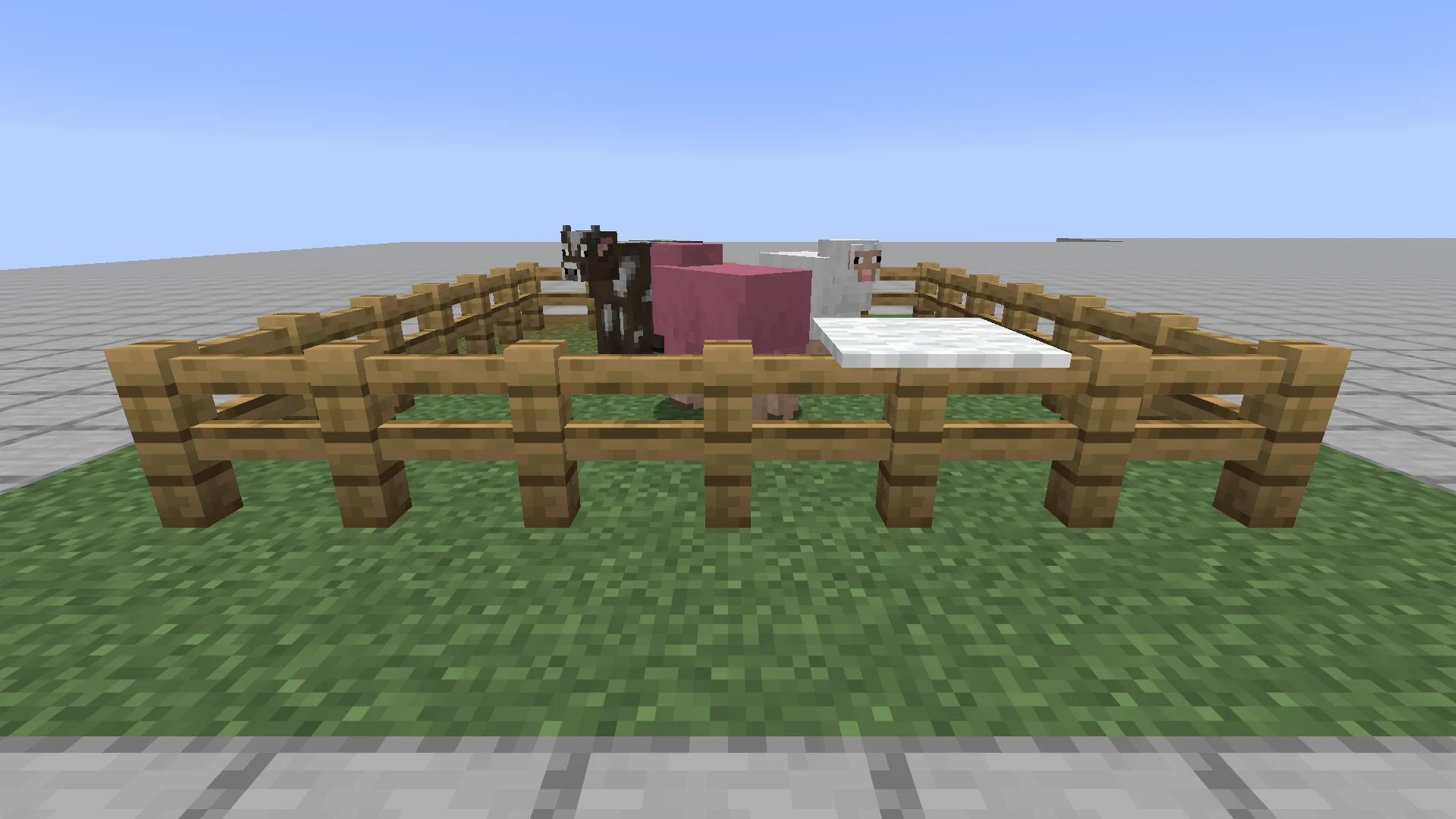
While a fence visually occupies a single block height (16 pixels tall), its collision box is 1.5 blocks tall.
Standard farm animals (sheep, cows, pigs, chickens), hostile monsters (zombies, skeletons, creepers), and players without potion effects have an unassisted jump height of approximately 1.25 blocks. Because 1.5 blocks exceeds this jumping capability, mobs cannot clear a standard fence from level ground.
Fence Connection Rules and Nether Brick Isolation
Fences dynamically evaluate adjacent horizontal blocks to form connecting rails. A fence automatically connects to:
- Solid Blocks: Any block providing a sturdy full side face (such as stone bricks, cobblestone, or solid timber) via
isFaceSturdy(). - Matching Fence Group: Neighboring fences sharing the same material tag.
- Fence Gates: Any fence gate aligned with the fence axis, regardless of whether the gate is open or closed.
A few full blocks are exceptions and never connect to fences: leaves, barriers, pumpkins, carved pumpkins, jack o'lanterns, melons, and shulker boxes.
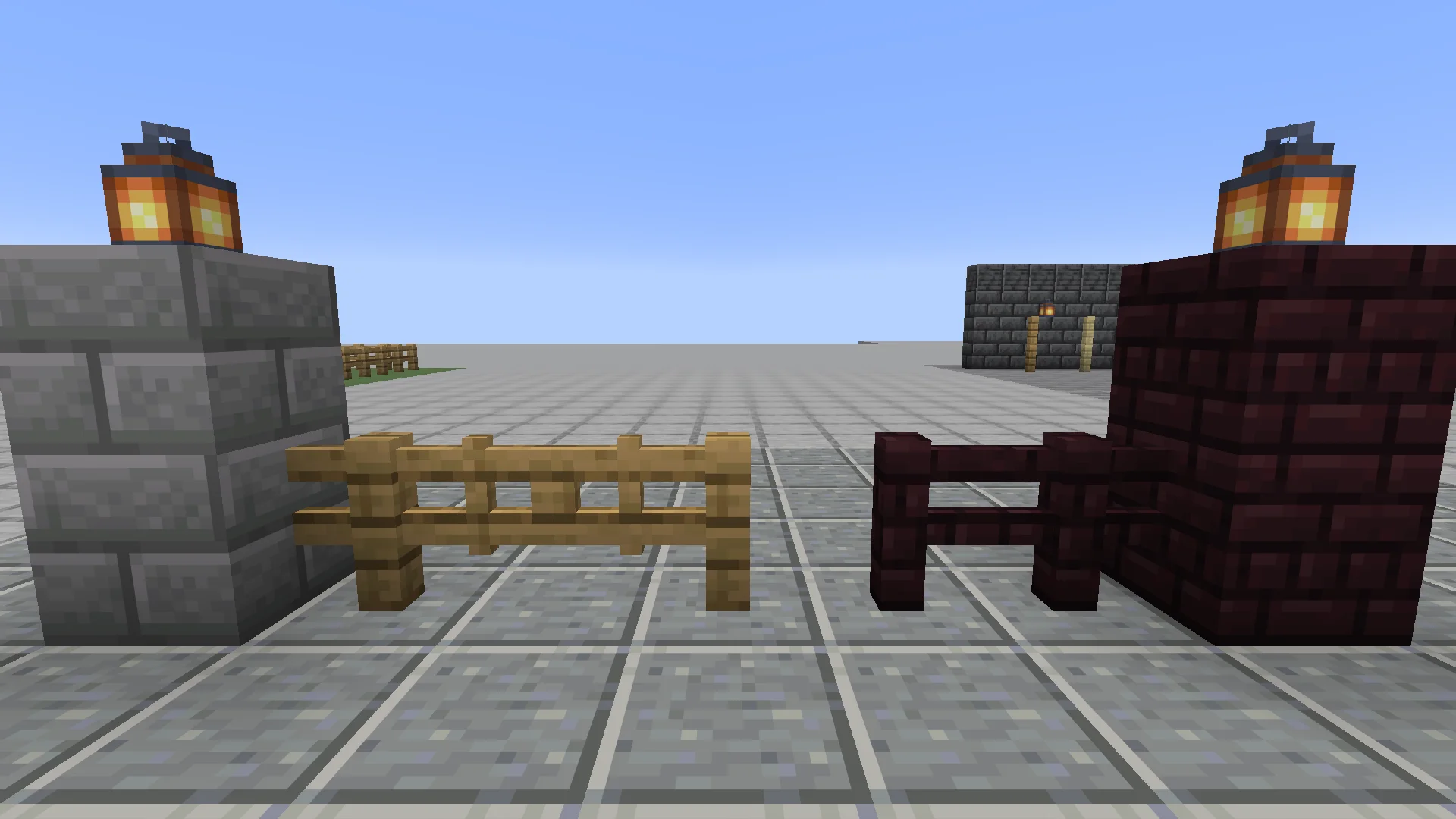
Wooden fences belong to the #minecraft:wooden_fences tag, whereas Nether Brick Fence belongs only to the general #minecraft:fences tag. Fences only join fences from the same group, so a wooden fence placed beside a Nether brick fence does not connect to it.
This incompatibility leaves an open gap between wooden and Nether brick fence posts. The gap is about three quarters of a block wide, so players, chickens and other narrow mobs can walk through it, so fill it with a block or keep one fence type along a pen wall. Both fence types connect normally to fence gates.
Tying Leads to Fences and Hitching Mechanics
Fence posts serve as stable hitching posts for leashed creatures. Holding a lead attached to a mob and right-clicking any fence post anchors the lead to the post. For steps on crafting leads, see our guide on how to make a lead.
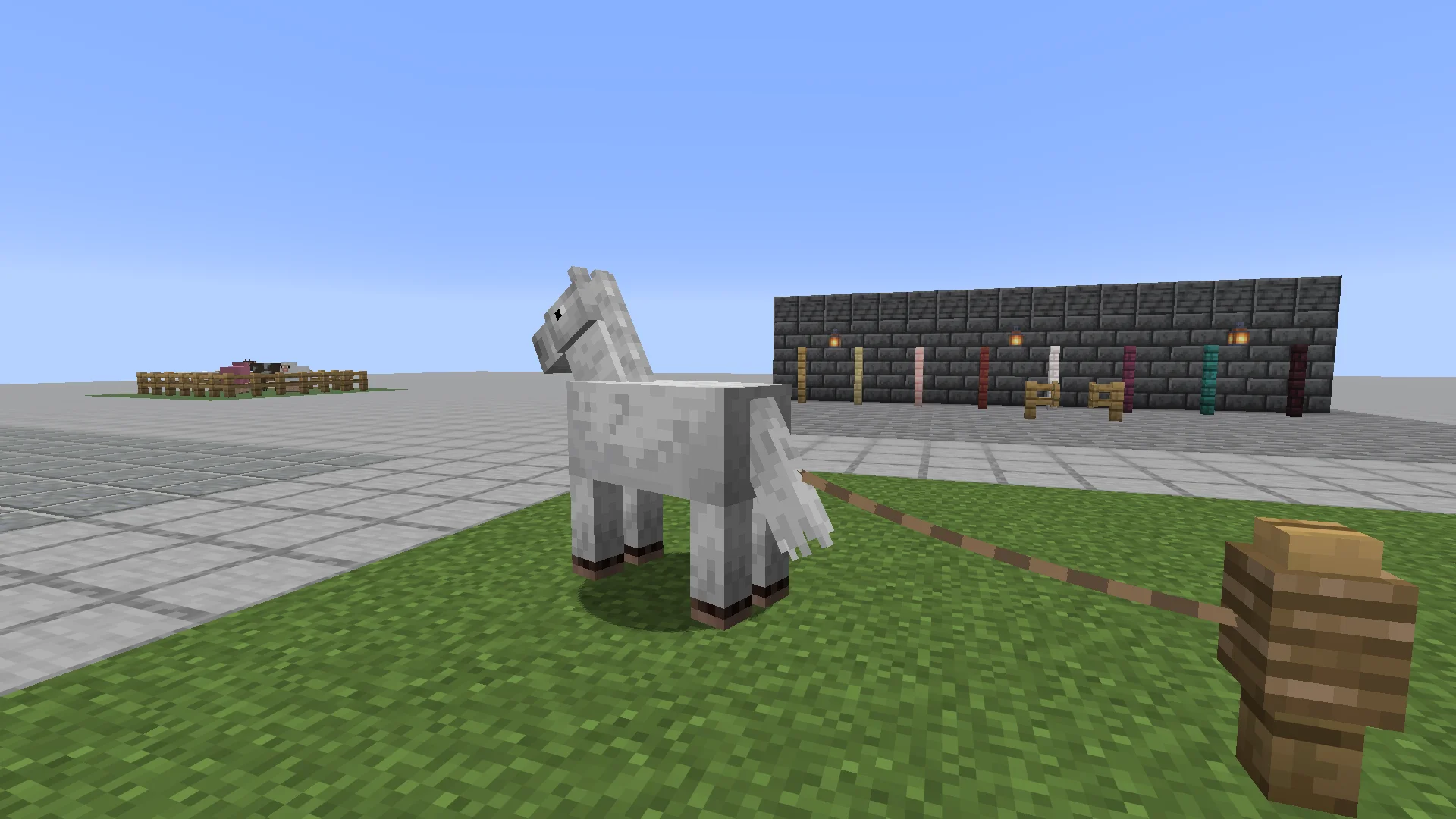
Tying a mob to a fence places a leash knot on the post. The lead then follows these limits in Java 26.x:
- Slack: Within about 6 blocks of the post the lead stays loose. Beyond that it pulls the mob back toward the fence.
- Snapping: If the mob ends up more than 12 blocks from the post, the lead breaks and drops as an item.
- Detaching: Use shears on the knot or the mob to cut the lead, or break the fence post. Interacting with the knot hands its leads back to you.
FAQ
Can you mix different wood planks to craft a fence?
No. All four wood planks placed in the crafting table must come from the same wood species. Mixing oak and birch planks in the same grid does not produce a fence.
Why can mobs and players not jump over a fence?
Although fences visually appear one block high, the game assigns them a 1.5-block collision box. Standard player and mob jump height is approximately 1.25 blocks, which is not high enough to clear the barrier.
Do Nether brick fences connect to wooden fences?
No. In game code, wooden fences and Nether brick fences belong to different tag groups. Placing them side by side leaves a gap between the two posts.