




Herding passive livestock across steep mountain ridges, deep rivers, or Nether portals quickly turns chaotic without a lead. In current Java 26.x and Bedrock, combining 5 String in a 3x3 crafting grid produces two durable leads, giving you direct physical control over animal pathfinding and letting you tether mobs securely to fence posts without building enclosed holding pens.
Unlike luring animals with wheat, carrots, or seeds, a lead forces the animal to follow you regardless of its natural AI pathfinding. This makes leads indispensable when relocating horses, cows, sheep, llamas, bees, and iron golems across mountains, rivers, and dense forests.
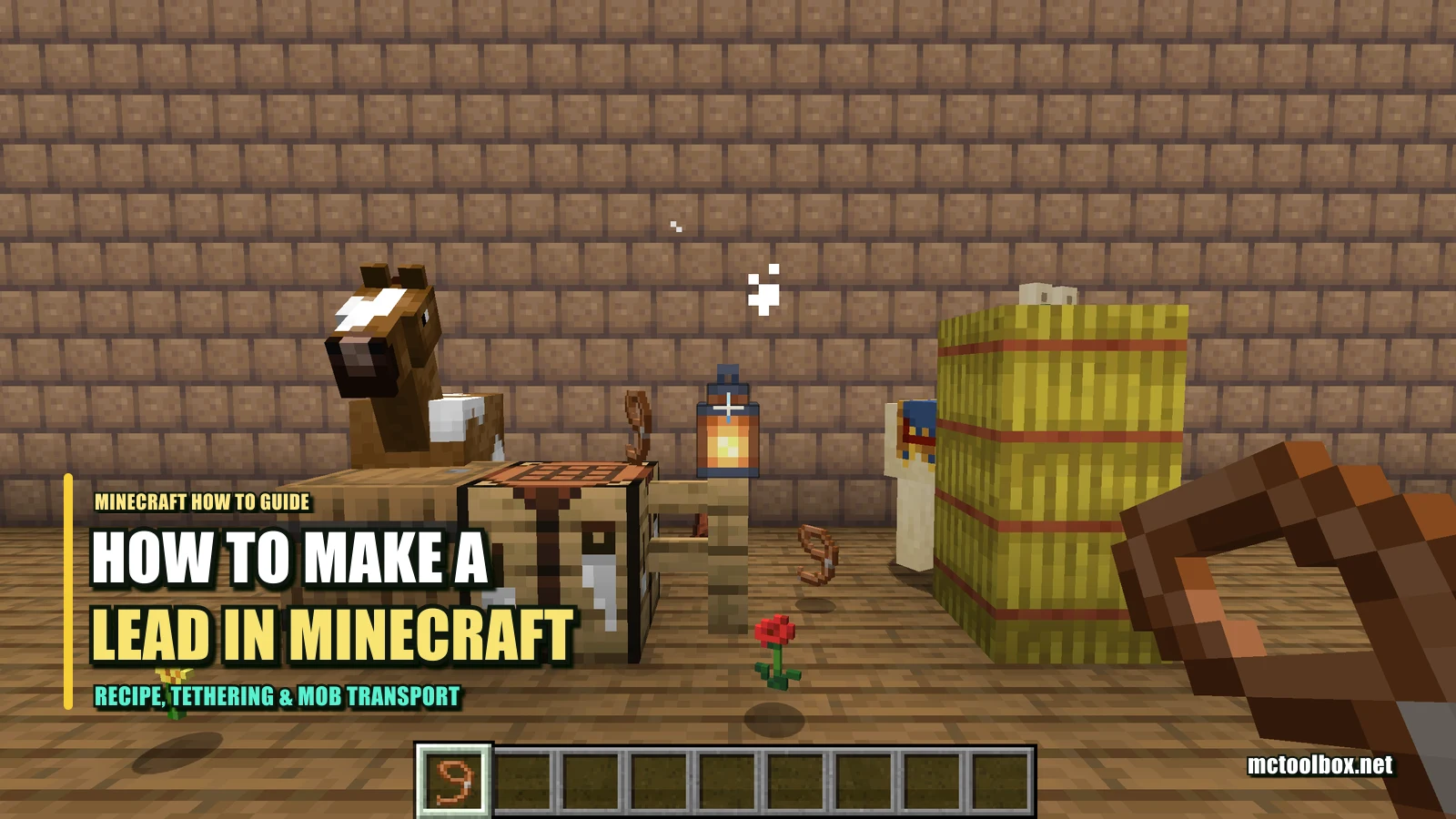
Materials and ingredients checklist
Gather the following items in your inventory before crafting your leads:
- 5 String: Obtained by defeating spiders or cave spiders, slicing cobwebs with a sword or shears, fishing, bartering with piglins, or looting dungeon and mineshaft chests.
- No Slimeball is needed for the current recipe. Older versions before Java 1.21.6 used four string and one slimeball.
- 1 Crafting Table: Required to access the full 3x3 crafting grid. A standard 2x2 player inventory grid cannot craft leads.
Gathering string
Five string is enough for one craft. String comes from several early-game sources:
- Hunting Spiders: Natural spider spawning requires darkness. Cave spiders come from monster spawners, whose light checks differ from natural spawning. Defeating a spider drops 0 to 2 pieces of string. Using a weapon enchanted with Looting III can boost drops up to 5 string per kill.
- Harvesting Cobwebs: Abandoned mineshafts, stronghold libraries, and abandoned villages contain dozens of cobwebs. Breaking a cobweb with a sword drops 1 string instantly. Shearing cobwebs harvests the web block itself, which can later be broken into string.
- Cats and Fishing: Tamed cats frequently bring string to their sleeping owner as morning gifts. Fishing in open water also yields string as common junk loot.
Wandering Trader shortcut: Each Wandering Trader arrives with two Trader Llamas on leads. If the trader dies or a llama is pulled far enough away that the lead snaps, that lead drops as an item, so you can collect up to two leads without crafting.
Crafting the lead on the 3x3 grid
Open your Crafting Table to reveal the 3x3 crafting grid. Arrange the 5 String into their exact designated positions:
- Top row: Place 1 String in slot 1 (top-left) and 1 String in slot 2 (top-middle). Leave slot 3 empty.
- Middle row: Place 1 String in slot 4 (middle-left) and 1 String in slot 5 (center). Leave slot 6 empty.
- Bottom row: Leave slots 7 and 8 empty, and place 1 String in slot 9 (bottom-right).
- Collect output: Pick up the 2 Leads from the output slot on the right.
| Crafting Grid Row | Left Column | Middle Column | Right Column |
|---|---|---|---|
| Top Row | String | String | [Empty] |
| Middle Row | String | String | [Empty] |
| Bottom Row | [Empty] | [Empty] | String |
Each current craft produces two leads from five string.
Mastering leash physics and mob towing
Once you have crafted leads, equipping and using them is straightforward:
- Place the Lead into your main hand hotbar slot.
- Approach an eligible mob (such as a horse, donkey, mule, cow, sheep, pig, chicken, wolf, cat, bee, or iron golem).
- Press the Use / Right-Click button on the target mob.
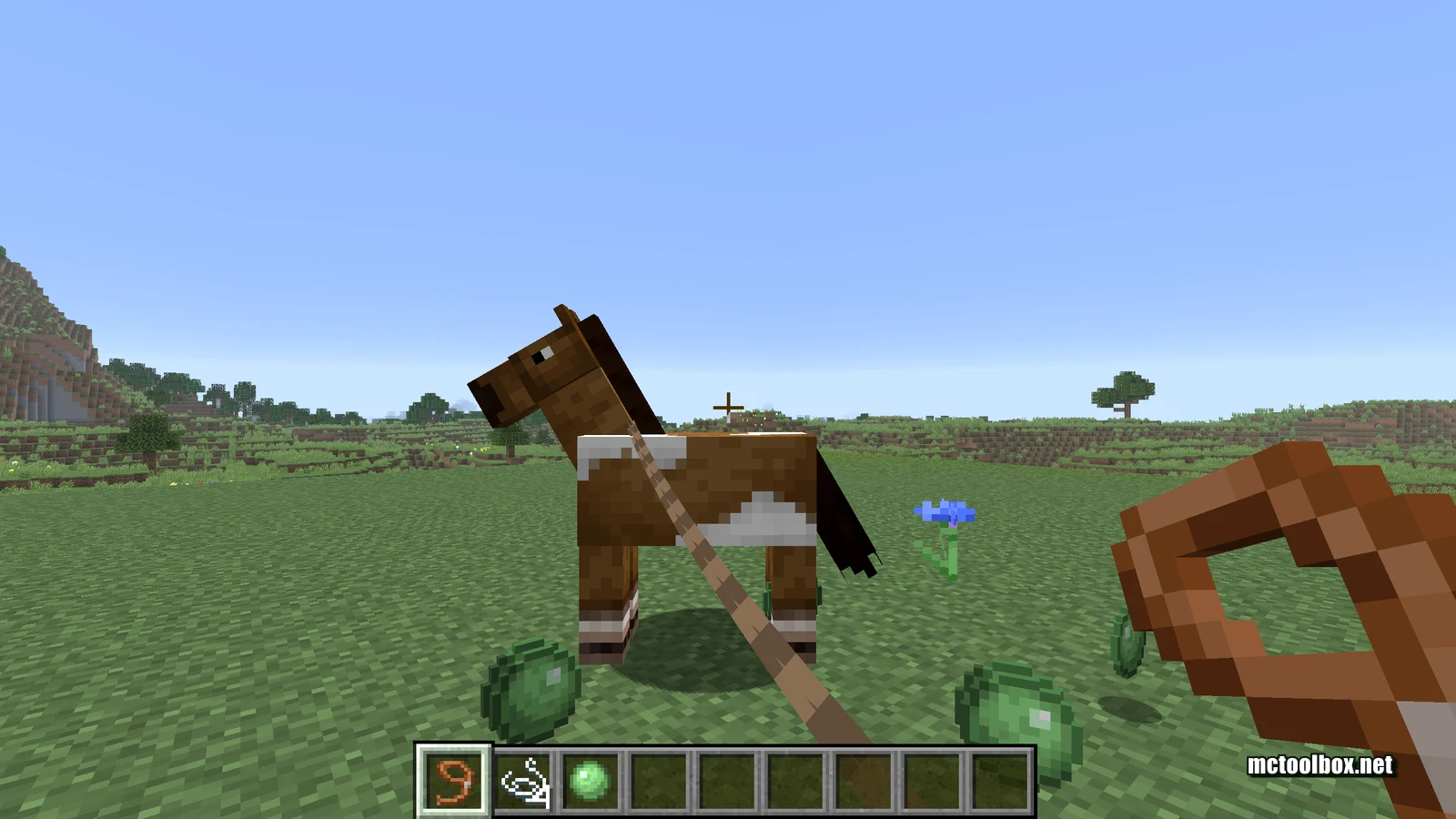
- A visible brown cord will connect your hand to the creature collar.
Understanding lead tension and break distances
Leads in Minecraft obey simulated spring elasticity physics:
- Standard trailing: While walking normally, the leashed animal gently follows 2 to 5 blocks behind your character.
- Sprinting and tension: When you sprint or ride a horse, the lead cord stretches. The tension pulls the leashed animal forward at accelerated speed.
- Break threshold (12 blocks in Java 26.x): If the distance between the player and the hitched mob exceeds 12 blocks, the lead snaps. The lead drops on the ground at the mob position as an item entity, and the animal stops following.
- Unleashing: To manually disconnect the tether without breaking it, use Shears on the tethered mob to cut the lead, or sneak-use it to detach it. In Java 26.x, leads can also connect eligible entities to one another; a Happy Ghast has a 16-block snap distance.
Securing mobs to fence posts with leash knots
Instead of penning your livestock behind wooden gates or digging earthen pits, leads let you hitch animals directly to fence posts in the open air.
- Attach a lead to your chosen mob and guide it near a fence post.
- Point your crosshair at any placed wooden or nether brick fence post.
- Press the Use / Right-Click button on the fence post.
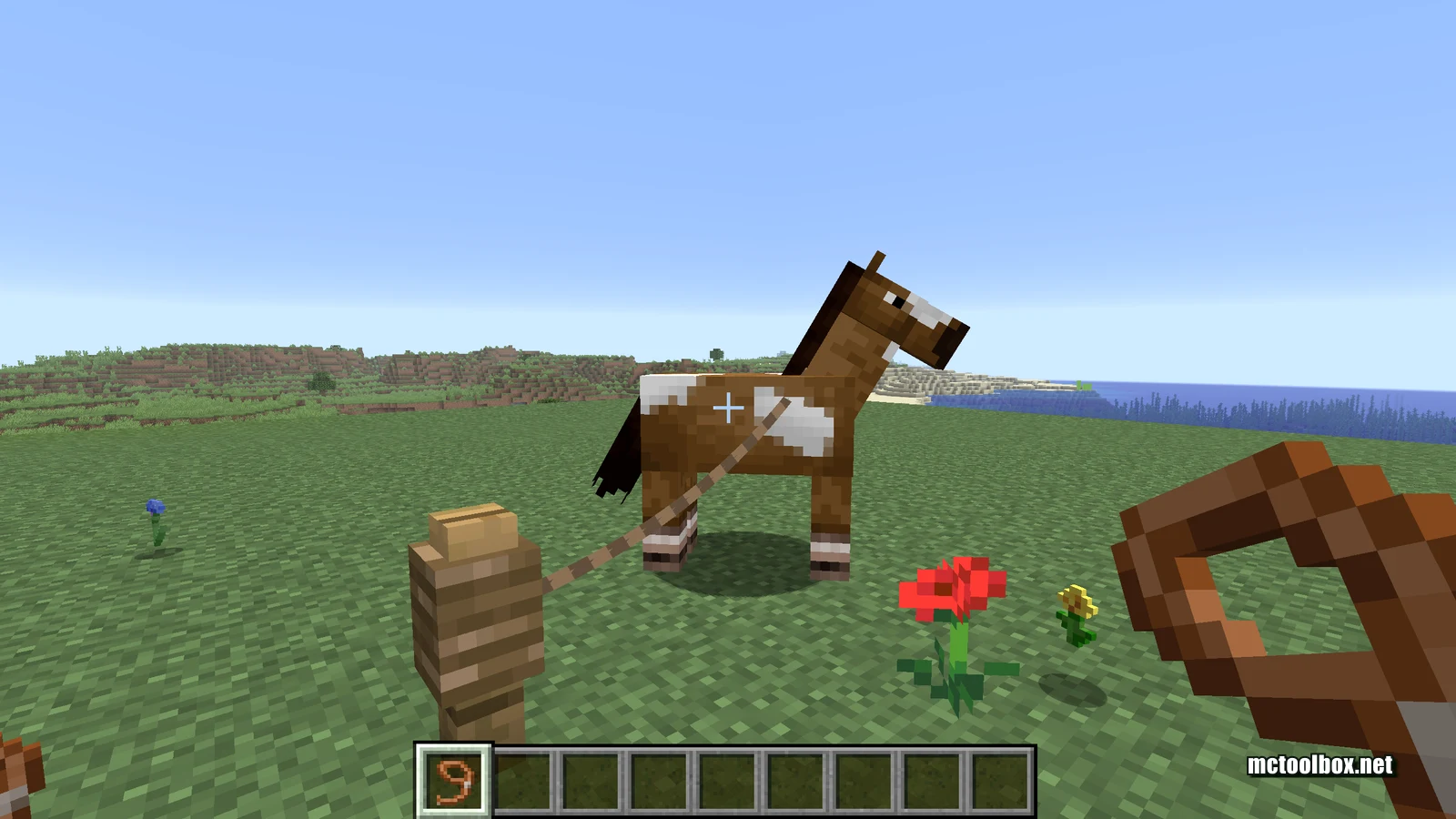
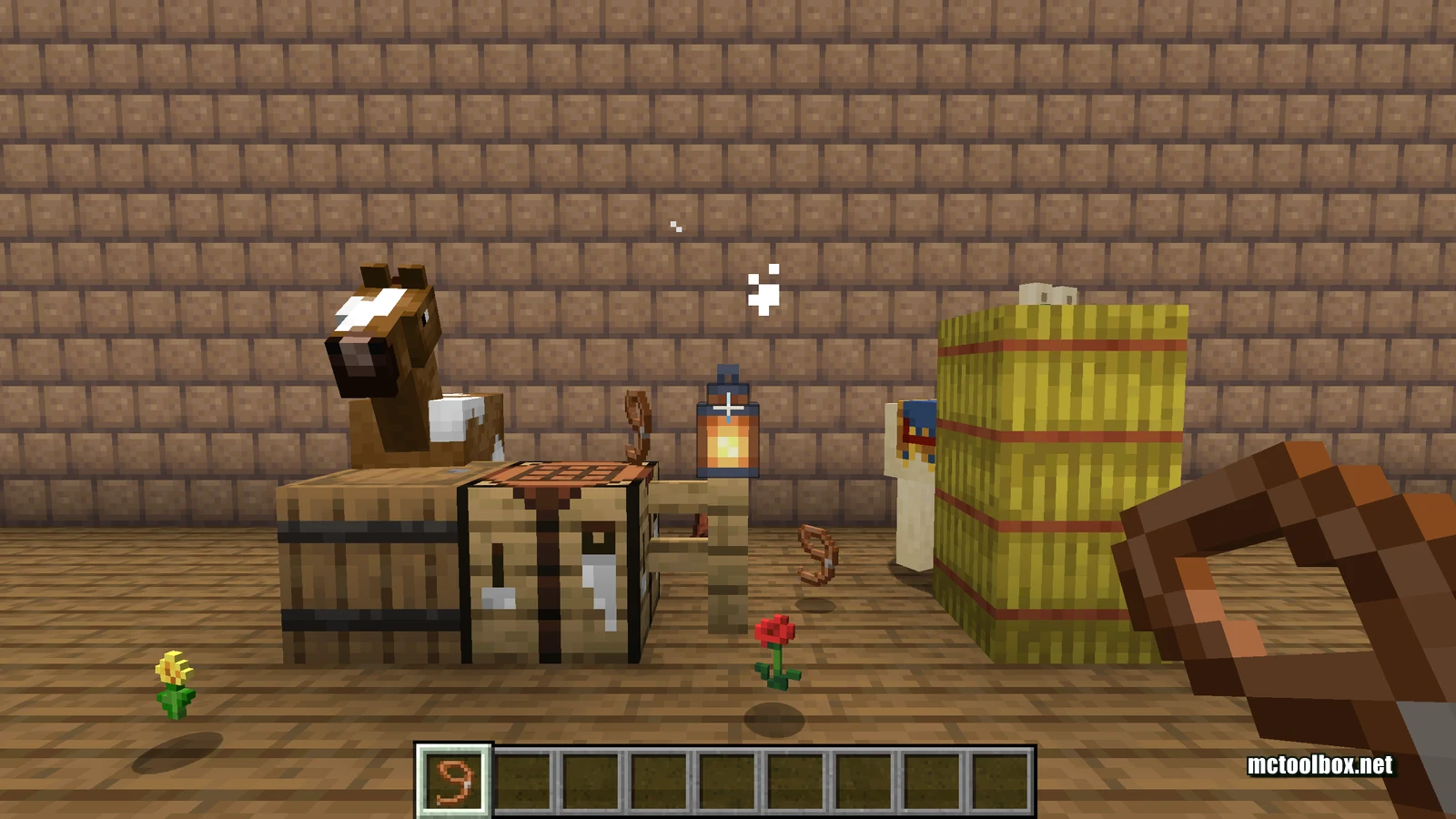
- The lead transfers from your hand to the fence post, creating a visible wooden Leash Knot entity around the post.
Managing hitched animals and multiple tethers
A fence tether follows the mob’s leash physics. In Java 26.x, ordinary leads become elastic around 6 blocks and snap beyond 12; keep hazards outside the reachable area. Key rules to remember:
- Multiple mobs on one post: You can tie multiple animals to the very same fence post. Simply lead each animal to the post and right-click it sequentially.
- Detaching from fences: To untie hitched animals, cut the leads with Shears. In Java 26.x, interacting with the knot can transfer its attached leads back to you rather than dropping them.
- Protection from wandering: Keep cactus, fire and dangerous drops outside the animal’s reach. A lead is not protection from environmental damage.
Mob transport tips & special mechanics
Beyond standard barnyard animals, leads unlock several specialized transportation techniques across Minecraft survival worlds:
Llama caravan trains
Llamas possess a unique herd mechanic: attaching a single lead to one llama causes up to 9 nearby llamas to naturally fall in line behind it, forming a single-file caravan. By leading just one animal, you can guide a full caravan of 10 llamas equipped with chest inventory bags across entire continents.
Moving Bees and Iron Golems
- Bees: Holding flowers lures bees slowly, but attaching a lead allows you to pull bees directly to artificial hives, glass greenhouses, or newly planted crop fields without losing them in the canopy.
- Iron Golems: Naturally spawned or player-created Iron Golems can be leashed and pulled up staircases or into village perimeter watchtowers to defend against pillager patrols and zombie sieges.
Java Edition vs Bedrock Edition differences
Current Java and Bedrock use the same five-string recipe. Some leashing mechanics differ by edition:
- Boat leashing (Java 1.21.6+ and current Bedrock): In Bedrock Edition, players could always attach leads directly to boats. In Java Edition, boat leashing was officially introduced in version 1.21.6 (Chase the Skies). You can now leash a boat containing two passengers and drag it across dry land, over rapids, or up hill slopes.
- Transporting Villagers: In both vanilla Java and Bedrock Editions, villagers cannot be leashed directly with a lead. However, you can place a villager inside a boat or minecart, and then attach a lead to the boat (in current Java 26.x) to tow the villager anywhere without rails.
- Audio effects: Bedrock Edition includes distinct rope knot tying and untying sound effects when hitching animals to fences, and Java 26.x also has dedicated lead interaction sounds.
Advanced mechanics, snap physics & Console Reference
Keep these technical mechanics in mind during long-distance expeditions:
Fall damage and cliff hauling
When leading mobs up steep cliffs, avoid pulling them off high ledges. If an animal hangs suspended in mid-air by the lead, vertical tension increases rapidly. If the lead snaps or the animal is released, it will suffer full cumulative fall damage upon landing, which can prove fatal to horses and livestock.
Leash Knot entity details
The knot formed on a fence post is technically an entity with the ID minecraft:leash_knot. It is a non-living attachment entity, not a mob with one health point. Use Shears to cut its leads or interact to take them back.
Item IDs and console give commands
| Item or Entity Name | Java Edition ID | Bedrock Edition ID | Key Feature |
|---|---|---|---|
| Lead (Item) | minecraft:lead | minecraft:lead | Stackable to 64; craft yields 2 |
| Leash Knot (Entity) | minecraft:leash_knot | minecraft:leash_knot | Attaches to fence posts; non-living entity |
| String | minecraft:string | minecraft:string | Mob drop and crafting material |
| Slimeball | minecraft:slime_ball | minecraft:slime_ball | Swamp/slime chunk drop |
To grant yourself leads instantly in creative mode, execute the command: /give @p minecraft:lead 2. To discover nearby swamp biomes and plan animal transport routes, inspect coordinates with the interactive seed map, explore crafting formulas in our crafting recipes database, or create custom gear with the /give command generator.