








Minecraft shader review
Lux V1 Shader
High-fidelity BSL evolution with hybrid volumetric fog, sample-rejected depth of field, and translucent reflections by TechTheDev
Download FilesLux V1 by TechTheDev is a high-fidelity visual expansion of Capt Tatsu's BSL Shaders, incorporating hybrid volumetric fog, sample-rejected depth of field, screen-space reflections on translucent blocks, and parallax self-shadowing.
Shader Index7 sections
Capt Tatsu's BSL Shaders has earned an enduring reputation as one of Minecraft's most reliable rendering packs, prized for its clean lines, balanced daytime lighting, and broad compatibility. However, veteran builders and cinematic creators often encounter boundaries in BSL's conservative post-processing pipeline. Lux V1, developed by TechTheDev, addresses those limits by reimagining BSL through modern optical engineering.
Rather than rebuilding an engine from scratch, Lux V1 utilizes BSL's dependable architecture as a foundation while overhauling the atmosphere with hybrid volumetric light rays, refined camera focus mechanics, screen-space reflections across translucent surfaces, and comprehensive weather grading across diverse biomes.
Beyond base BSL: The high-fidelity rendering evolution
Warm sunset grading, roofline ambient occlusion, and optical bloom
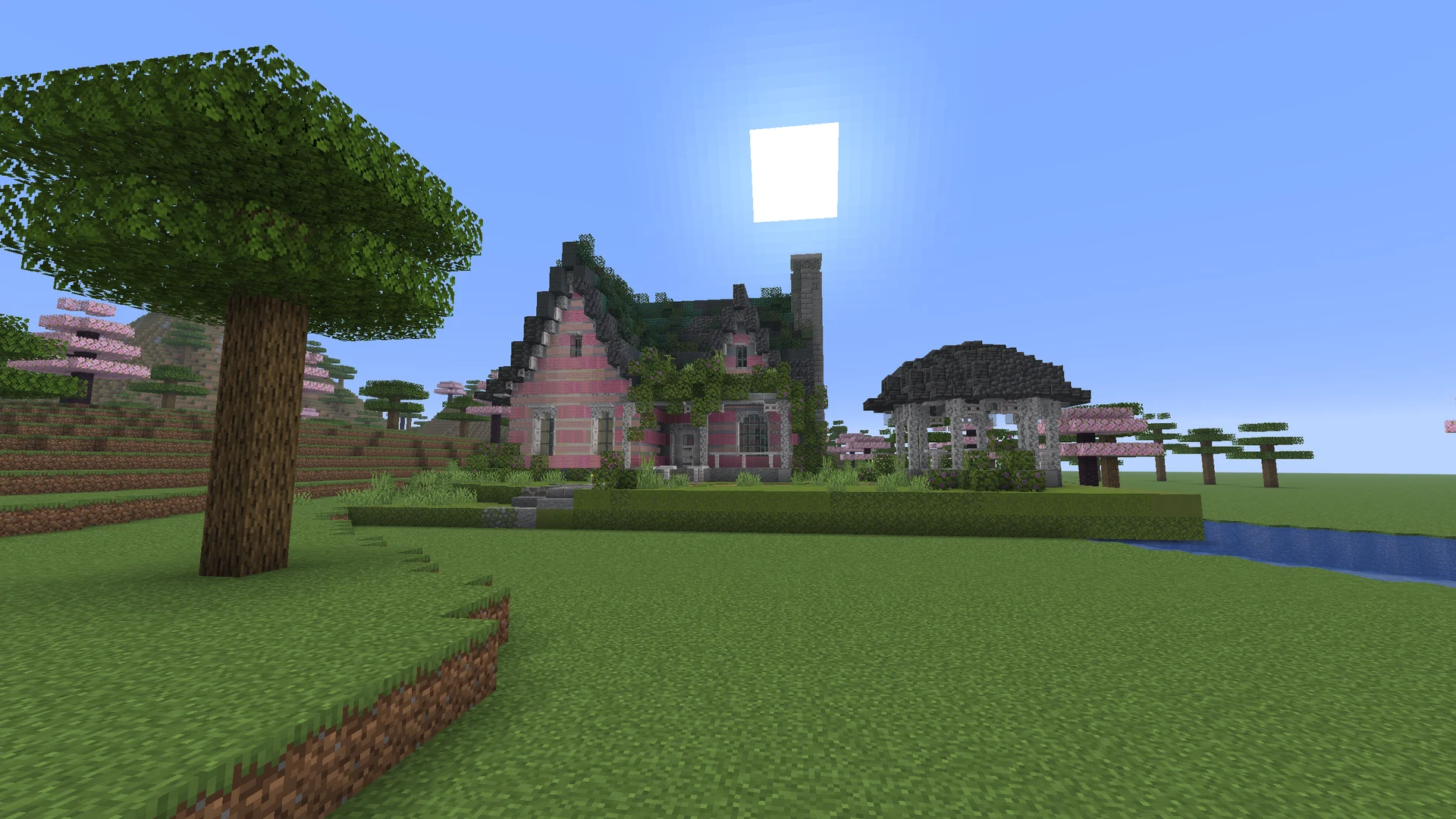
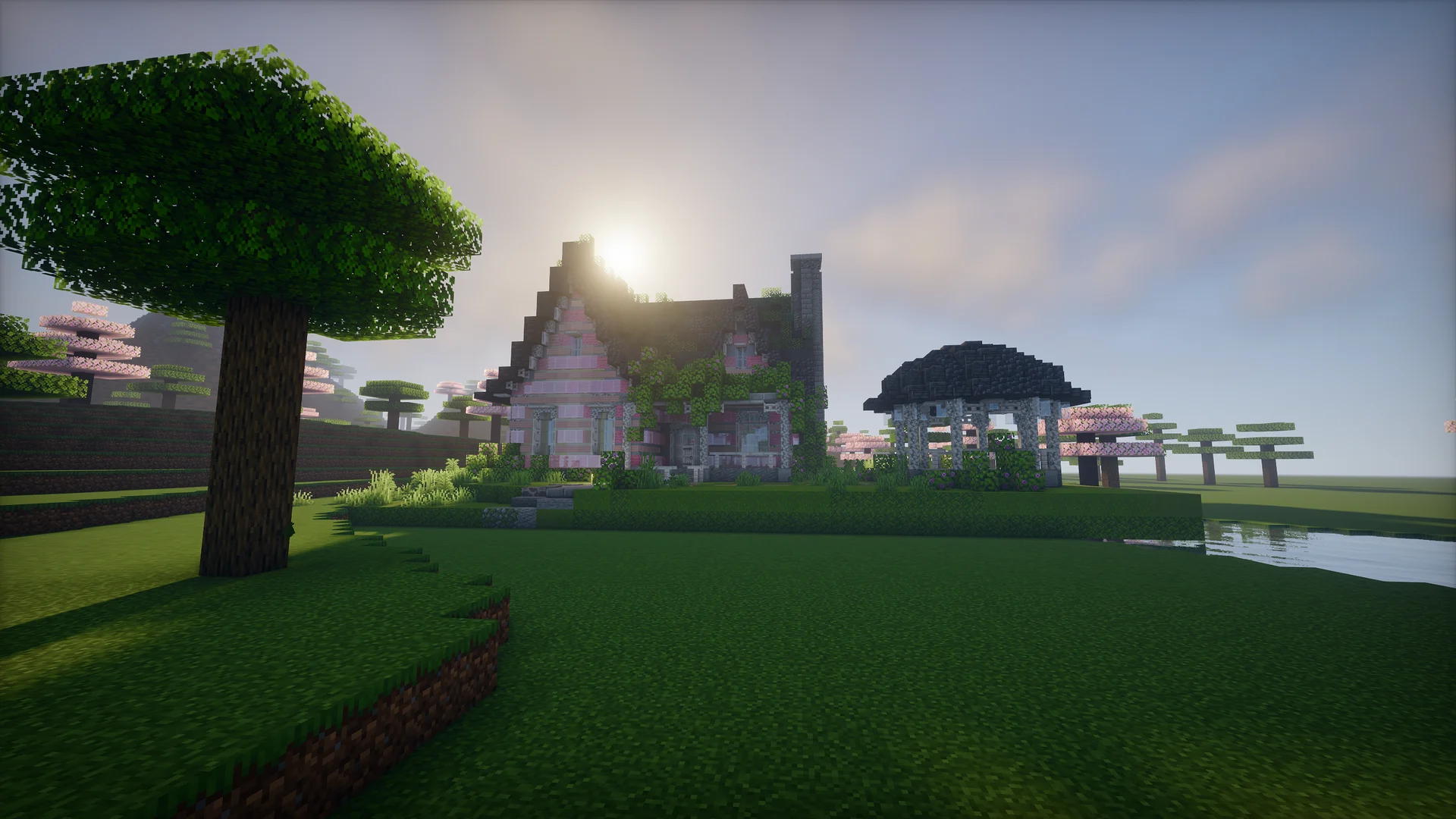
The visual distinction between default BSL and Lux V1 is immediately noticeable during transitional hours like golden hour and sunset. Lux enhances ambient occlusion sampling along complex architectural geometry, ensuring that intricate overhangs, stone masonry joints, and recessed garden gazebos cast natural contact shading without crushing dark areas into muddy noise.
Direct sunlight produces a gentle, photographic bloom that emanates from the solar disk across building roofs. Instead of harsh digital glare, the illumination bleeds smoothly into the surrounding skybox, complementing the pastel and wood palettes common in survival homes.
Hybrid volumetric fog and atmospheric weather profiles
Dual fog calculation pipelines paired with customized biome color ramps
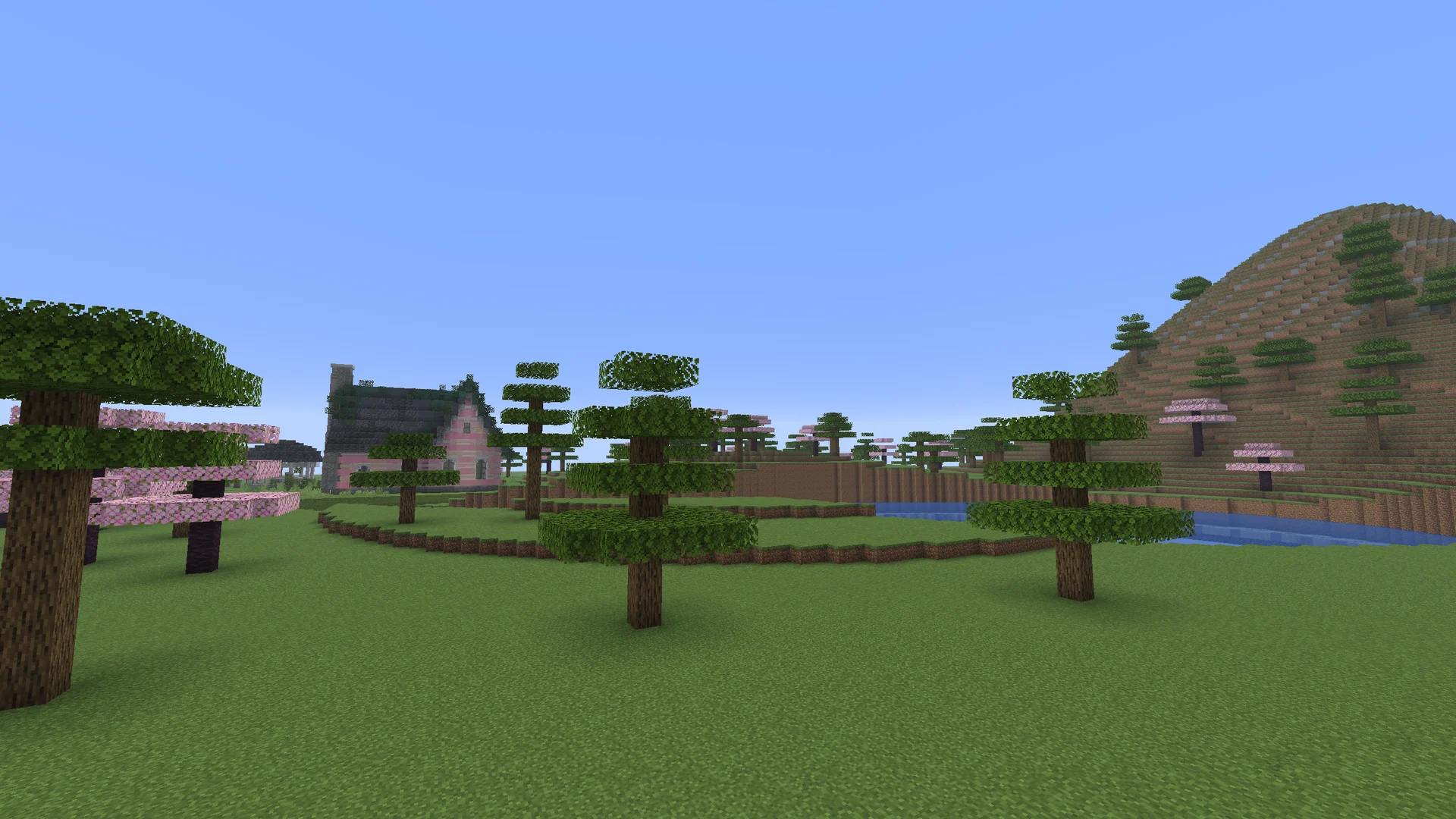
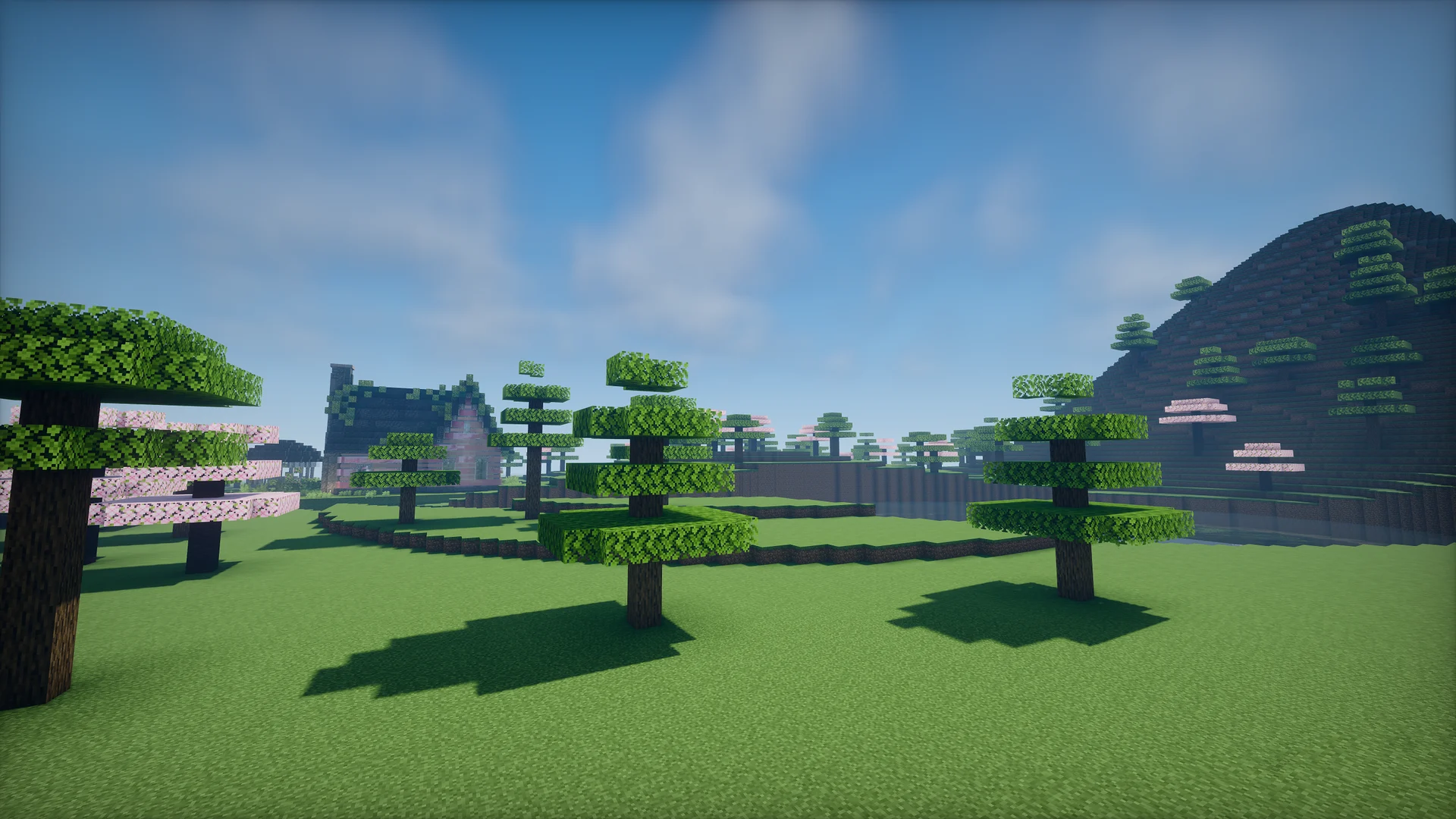
A standout architectural enhancement in Lux V1 is its Volumetric Fog pipeline. Inside the Atmospherics configuration menu, players can choose between Legacy and Hybrid fog types. The Hybrid implementation blends distance-based atmospheric scattering with temporal anti-aliasing (TAA) accumulation, creating dense, coherent sun rays filtering through forest canopies and ridge lines without grainy rasterization artifacts.
Furthermore, Lux incorporates tailored environmental color matrices for extreme weather states and foreign dimensions: Desert sandstorms gain an opaque dust haze, Swamp rain takes on a humid greenish tint, and each Nether biome (from Soul Sand Valleys to Basalt Deltas) receives bespoke atmospheric fog mapping.
Water optics and translucent screen-space reflections
Expanding screen-space reflections to stained glass, ice, and river basins
In most conventional shaderpacks, screen-space reflections (SSR) are strictly reserved for standard water surfaces. Lux V1 introduces the Translucent Reflections toggle, permitting specular calculations across a broader spectrum of transparent materials, including ice sheets, stained glass panes, and slime blocks.
On water bodies, the shader implements a fluid wave mesh with Fresnel-accurate sky specular reflections at grazing angles. Crucially for survival players exploring riverbeds or coastal trenches, water clarity remains high beneath the surface, avoiding the murky opacity that often makes underwater navigation disorienting.
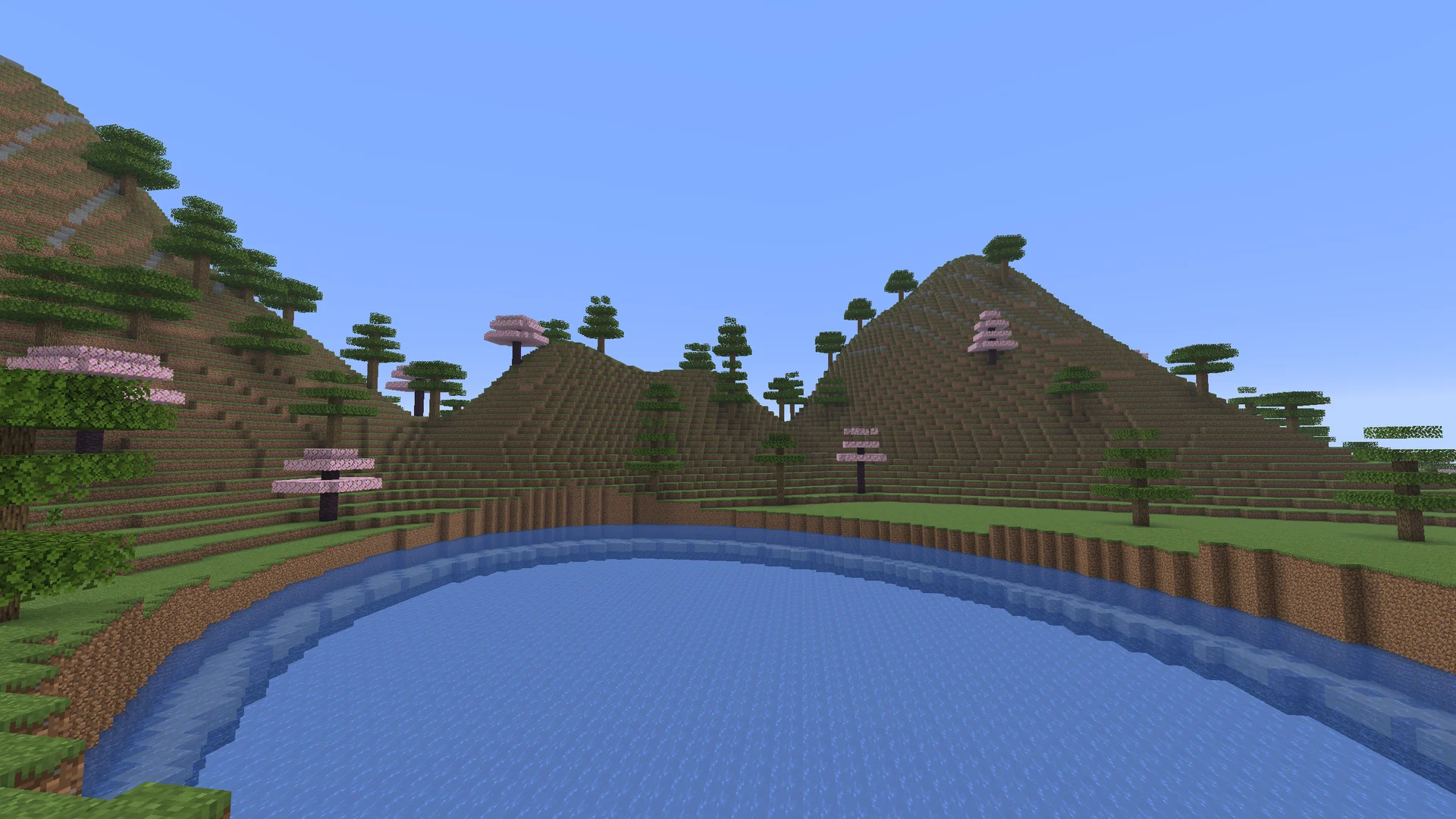
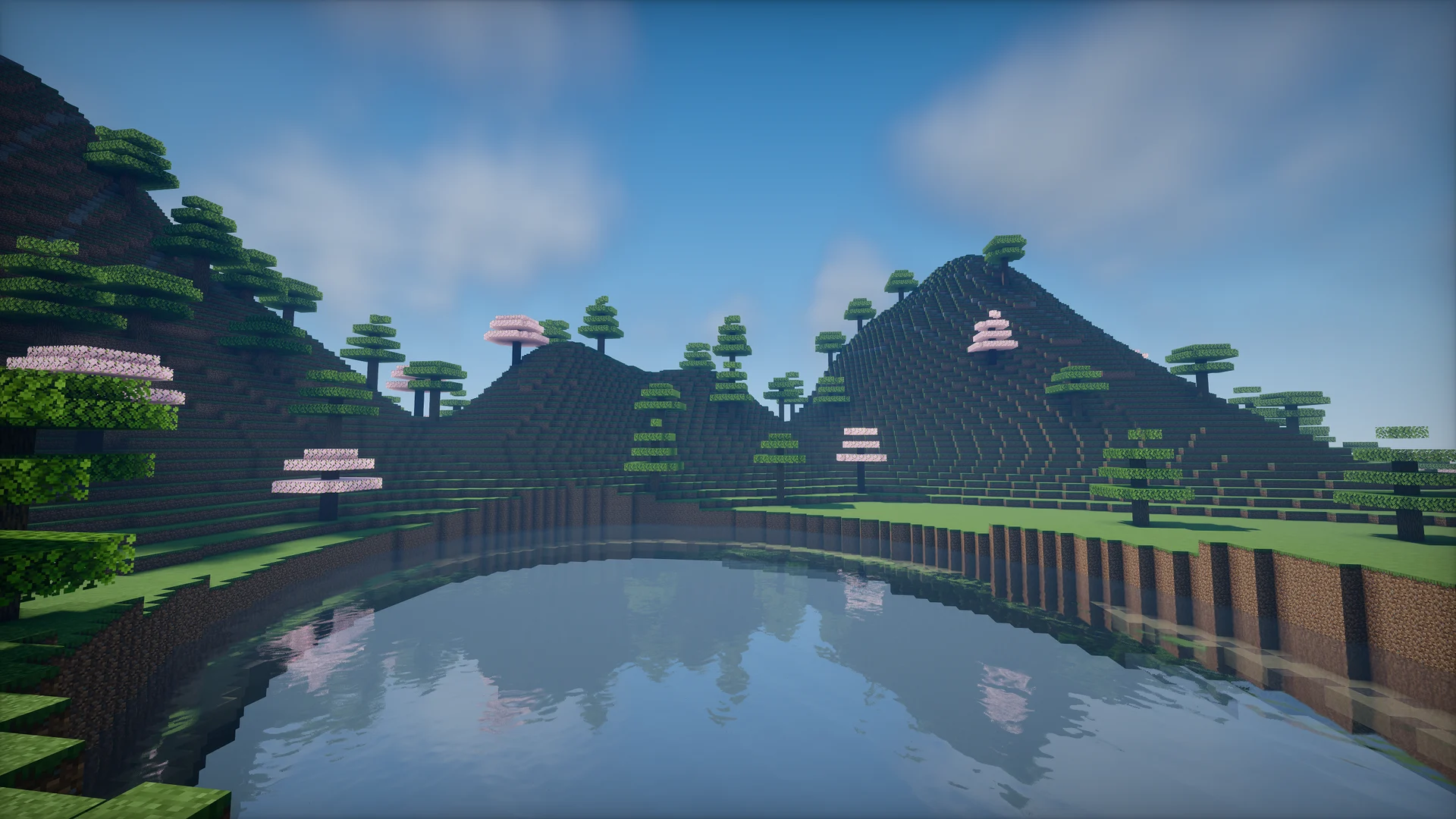
Cinematic camera optics: Sample-rejected depth of field and dirty lens
Eliminating edge blur bleeding with intelligent depth sample filtering
Depth of field (DOF) in Minecraft shaders frequently suffers from an annoying artifact: blurred background colors incorrectly bleed across the sharp edges of foreground items, such as held tools or close character models. Lux V1 solves this using an intelligent Sample Rejection algorithm.
When calculating circle-of-confusion blur kernels, Lux evaluates depth discrepancies between neighboring pixels and rejects samples originating from disjoint geometry layers. Creators can choose between Realistic and Toon focus profiles, fine-tune manual focal distances for macro photography, or activate the Dirty Lens bloom pass to simulate cinematic camera glass in sunny environments.
Parallax self-shadowing and material configuration
Relief textures casting physical shadows onto their own surfaces
For players pairing shaders with high-resolution resource packs, Lux V1 provides extensive LabPBR 1.3 support alongside an advanced Parallax Occlusion Mapping (POM) implementation. While standard POM creates the visual illusion of recessed brick mortar and wood grain, Lux includes Parallax Self-Shadowing (SELF_SHADOW).
With self-shadowing enabled, raised geometric surfaces cast real-time shadows into their own recessed crevices as the sun travels across the sky. This transforms flat cobblestone and chiseled stone bricks into tactile, sculptural architectural elements without requiring heavier ray-traced voxel packs.
Performance profiles and hardware setup
Configuring presets from Low to Ultra with Iris or OptiFine
Lux V1 provides four master quality profiles (Low, Medium, High, and Ultra) inside the shader configuration screen:
- Low & Medium: Disables heavy volumetric fog and limits shadow map resolution, delivering fluid 60+ FPS on entry-level dedicated GPUs and modern integrated graphics.
- High: The recommended baseline for modern desktop gaming, enabling ambient occlusion, balanced shadow resolution, and atmospheric sun rays.
- Ultra: Maximizes shadow map precision, activates full volumetric light scattering, and extends parallax draw distances for powerful gaming systems.
Lux V1 functions smoothly on both Iris (recommended on Fabric or NeoForge) and OptiFine. To install, download Lux_v1.3.zip from Modrinth, place it into your .minecraft/shaderpacks directory, and apply it in Video Settings.
Download links
We do not host Minecraft shader files directly. Download links go to the creator's official project pages.
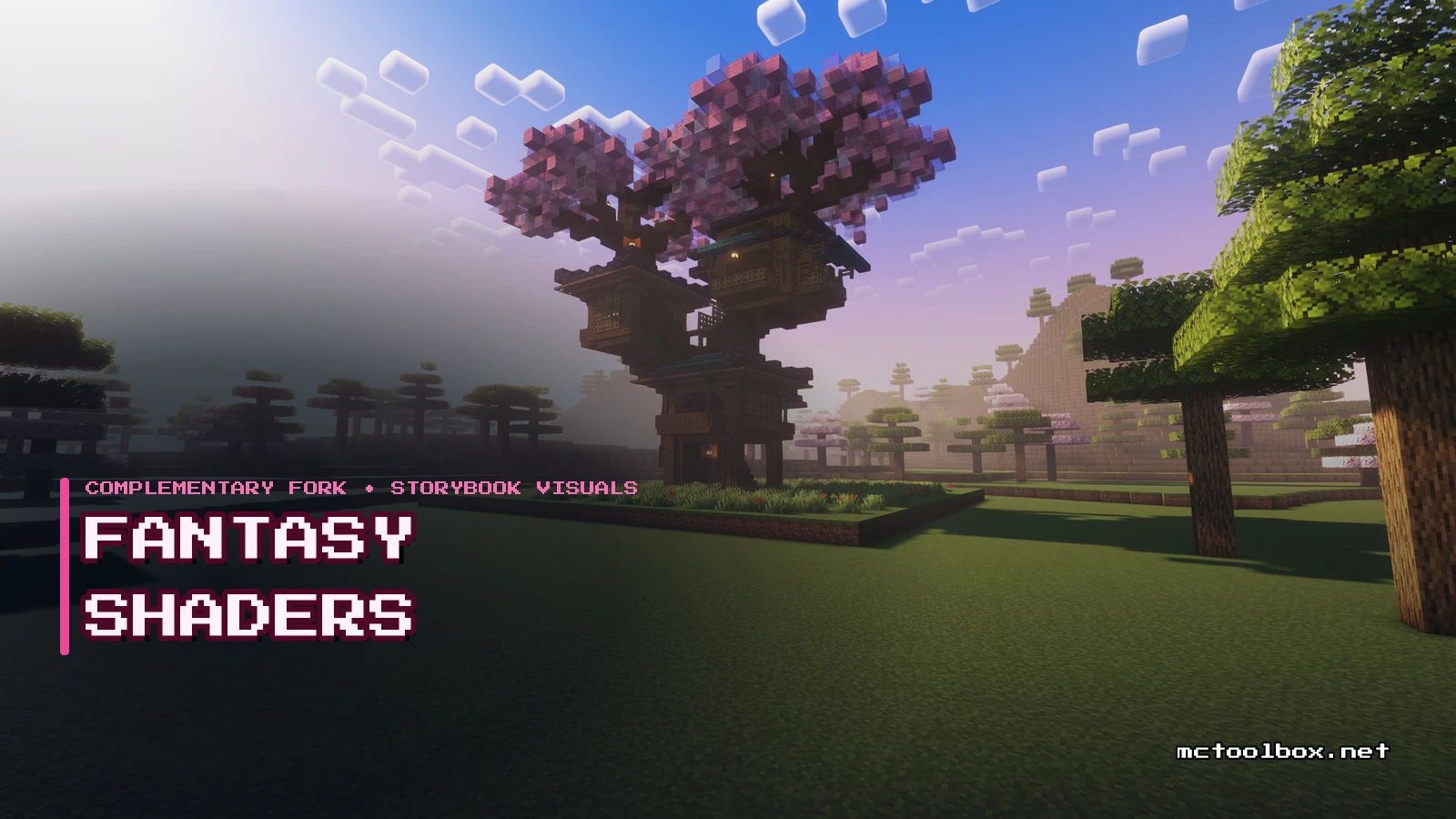
Fantasy Shaders Reimagined
Fantasy Shaders Reimagined by Aleeeee is a stylized fork of Complementary Shaders engineered for vibrant RPG atmosphere, featuring multi-tonal golden sunsets, deep blue night skies with shooting stars, and a surreal Black Hole in The End.
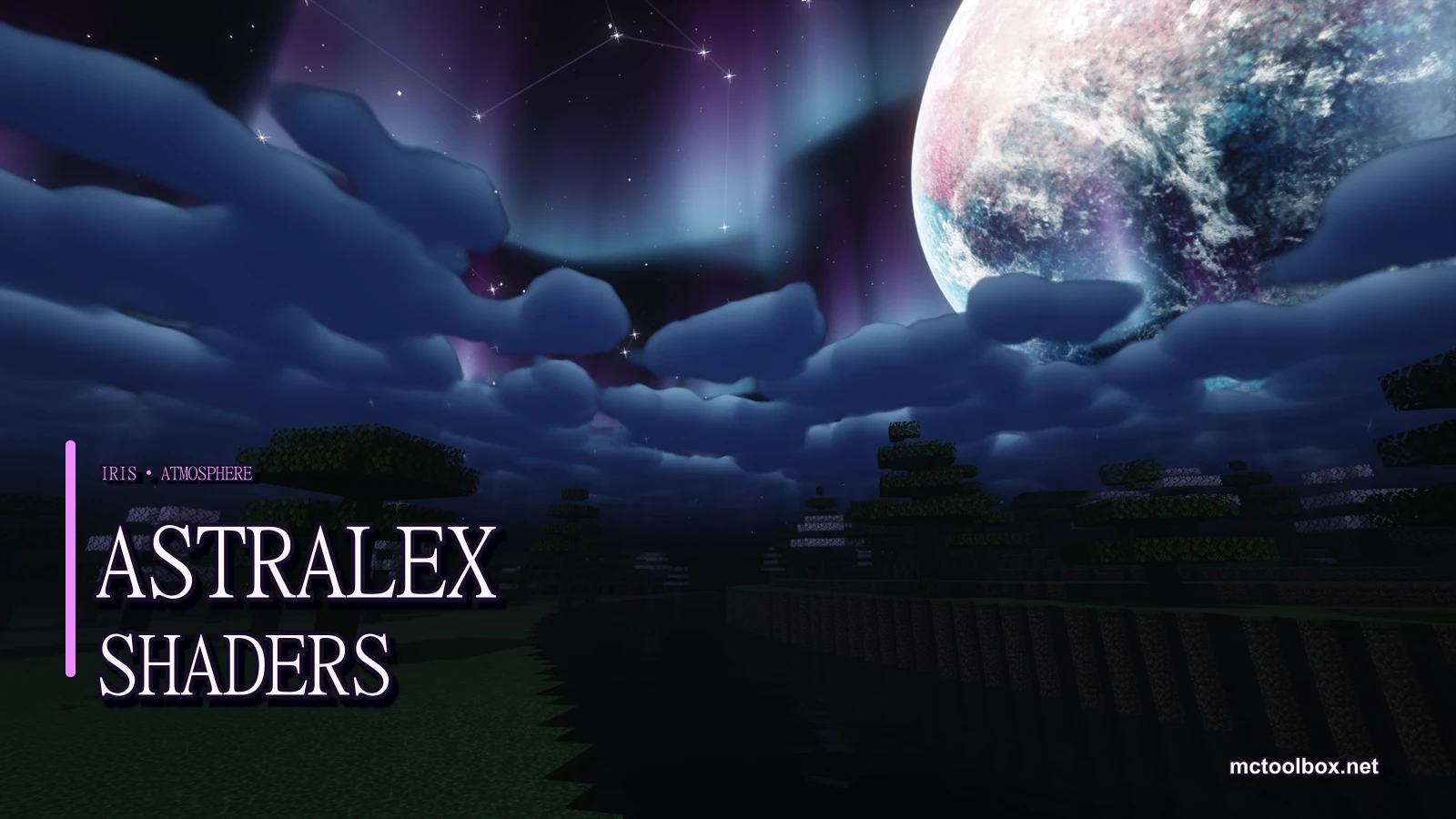
AstraLex Shaders 1.16.5 - 26.3
AstraLex is a highly configurable Minecraft shader pack with stylised skies, coloured lighting, reflections, aurora effects, and a strong cinematic night profile.
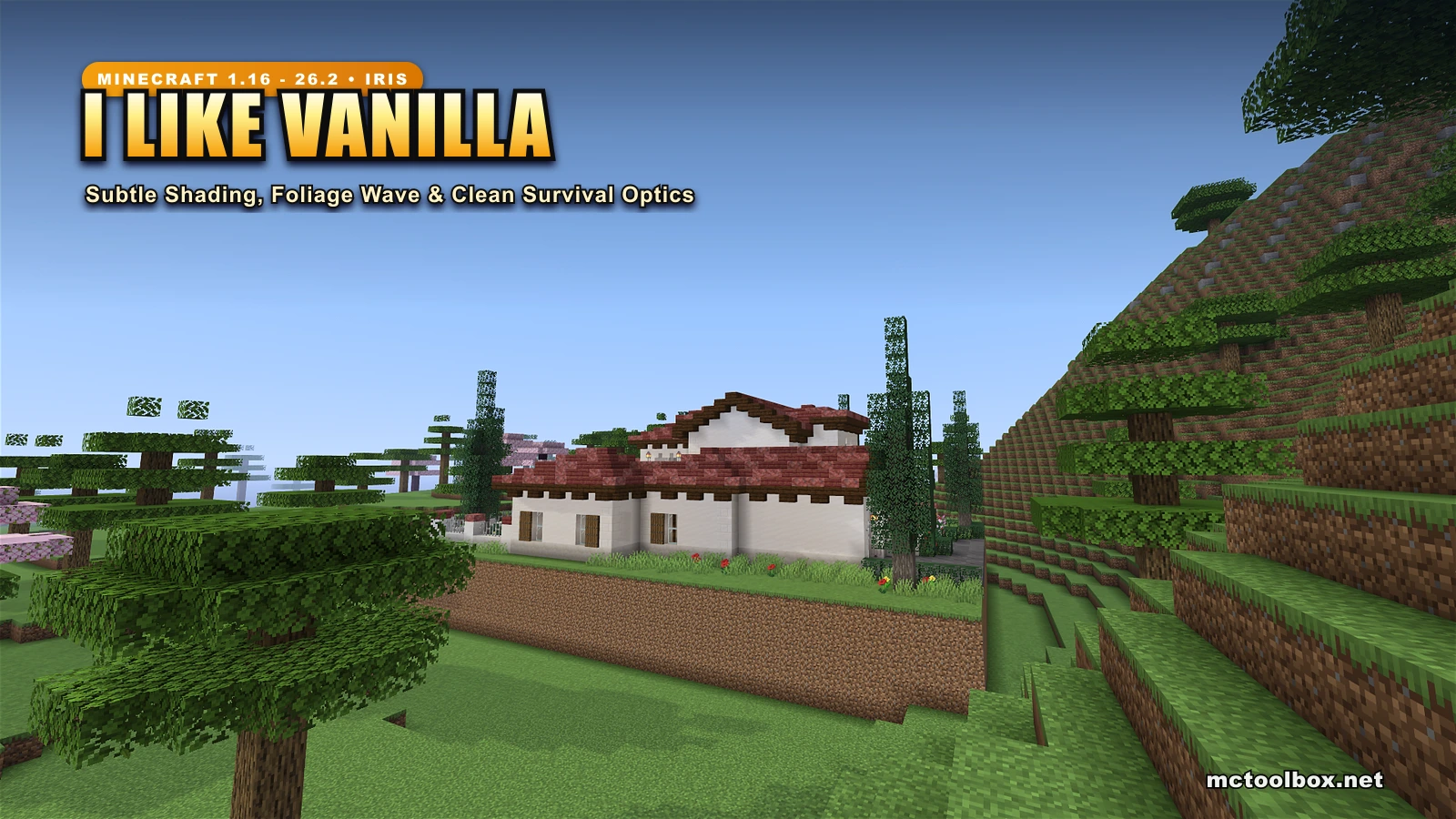
I Like Vanilla Shaders 1.16 - 26.3
I Like Vanilla by What42Pizza enhances Minecraft with subtle waving plants, clear water caustics, and soft ambient lighting while preserving the classic blocky art style.