




Zombie Invade 100 Days Modpack Review: Urban Survival and Escalating Infection
Surviving the 100-day mutation countdown in the Lost Cities with TAC:Z ballistic firearms, Spartan melee weapons, and vertical salvage runs.
Modpack by FlameFire
- Minecraft versions
- 1.20.1
- Loader
- Forge
- Recommended allocated RAM
- 8 GB
- Mods in reviewed version
- 143
- Multiplayer
- Supported
Zombie Invade 100 Days brings the brutal tension of the 100-day apocalypse challenge into Minecraft 1.20.1 Forge. Built around an escalating infection curve where zombies mutate every ten days, the pack drops survivors into the towering concrete canyons of the Lost Cities. Armed with the realistic ballistics of Timeless and Classics: Zero (TAC:Z), silent Spartan Weaponry polearms, and Sophisticated Backpacks for heavy scavenging runs, survival requires strict noise discipline, tactical barricading, and constant preparation before the next horde night strikes.
In this guide8 sections
The 100-Day Mutation Countdown: How the Threat Evolves
Most survival modpacks settle into a comfortable rhythm once you secure basic iron armor and a fenced perimeter. Zombie Invade 100 Days actively prevents that complacency through an automated world timer that steadily mutates the infected population across a 100-day lifecycle. Every ten days, the baseline zombie stat pool receives systemic upgrades, turning slow vanilla shufflers into fast, armored predators capable of tracking survivors across hundreds of blocks.
In the opening ten days, survival feels manageable. The infected burn in direct daylight, move at standard speeds, and yield to basic melee strikes. This brief grace period is your only window to establish a secure perimeter, gather clean water and rations, and stock raw gunpowder. Once the day counter crosses the first milestone, daylight immunity begins spreading through the population, and specialized mutations begin appearing in force.
Rather than spawning into empty wilderness, the modpack integrates the Lost Cities world generator directly into the survival experience. You start amid crumbling concrete skyscrapers, collapsed underground transit tunnels, and cracked asphalt streets overgrown with dynamic trees. High-rise structures offer immediate vertical safety compared to ground-level plains, but they also present unique hazards that make reckless exploration fatal.
Interior skyscraper layouts feature elevator shafts with missing flooring, broken window frames that allow airborne or climbing zombies to infiltrate, and unlit basement sublevels packed with dormant nests. Navigating these urban canyons requires methodical room clearing. Sconces, torches, and barricade blocks are just as valuable as ammunition when claiming a new floor for storage.
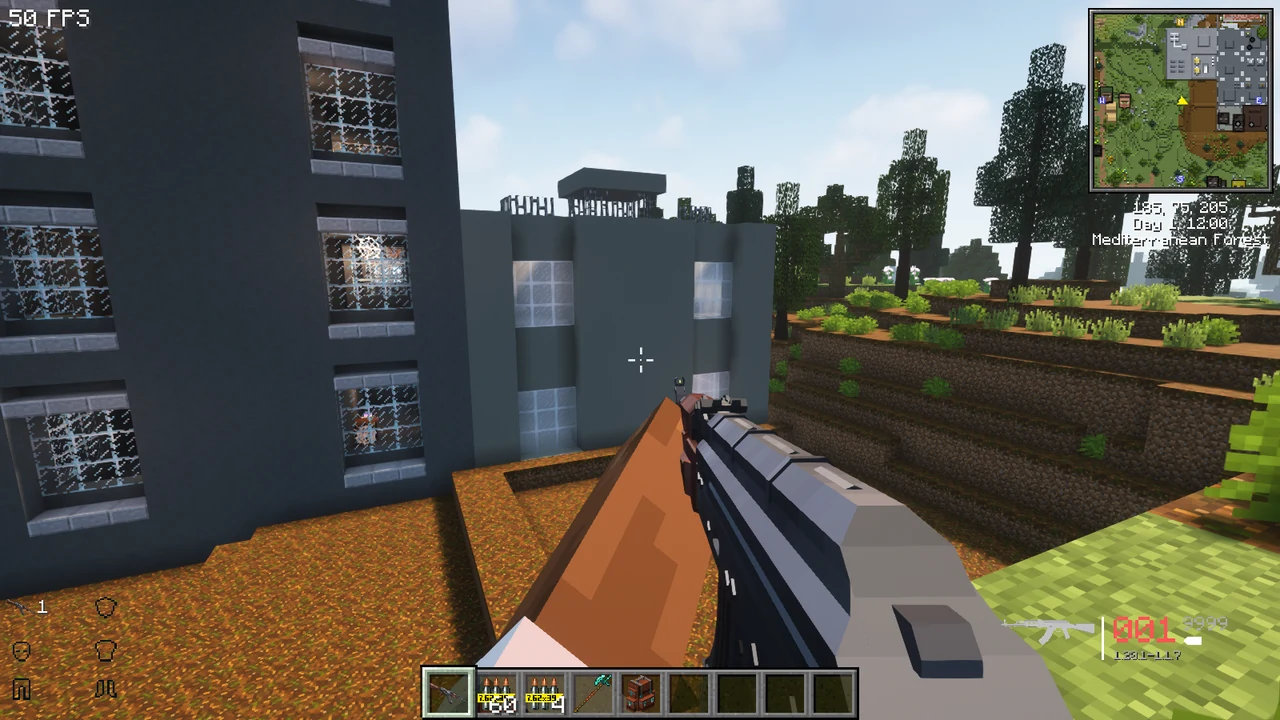
Ballistic Firepower vs Stealth: Balancing TAC:Z with Spartan Melee
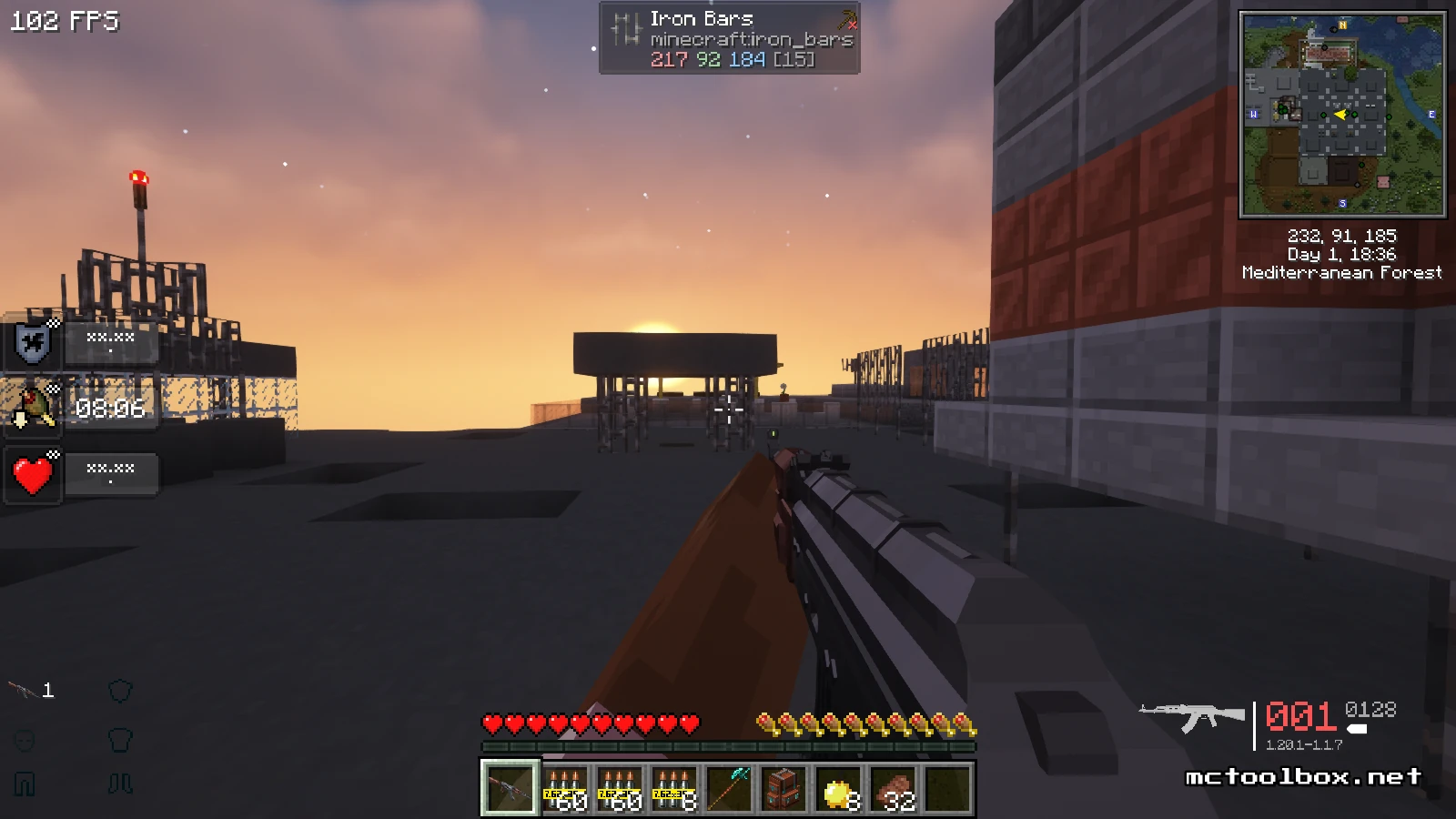
Combat in Zombie Invade 100 Days centers on the interplay between Timeless and Classics: Zero (TAC:Z) kinetic firearms and Spartan Weaponry cold steel. TAC:Z provides exceptionally detailed military firearms with authentic recoil patterns, tactical reload animations, and caliber-specific ballistic damage. Firing an assault rifle or shotgun delivers immediate kinetic stopping power against incoming sprinters, but that power comes with a significant operational cost: gunshot acoustics.
Discharging a firearm inside an urban corridor echoes across nearby sectors, instantly alerting every infected within earshot. A single gunshot intended to clear a corridor can quickly pull a multi-floor swarm down the stairwell. To survive sustained runs, you must adopt strict noise discipline: employ Spartan halberds, spears, and katanas for routine silent clearing, and reserve high-caliber rifles like the AK-47 or M4A1 for open-area emergencies and armored mutant breaches.
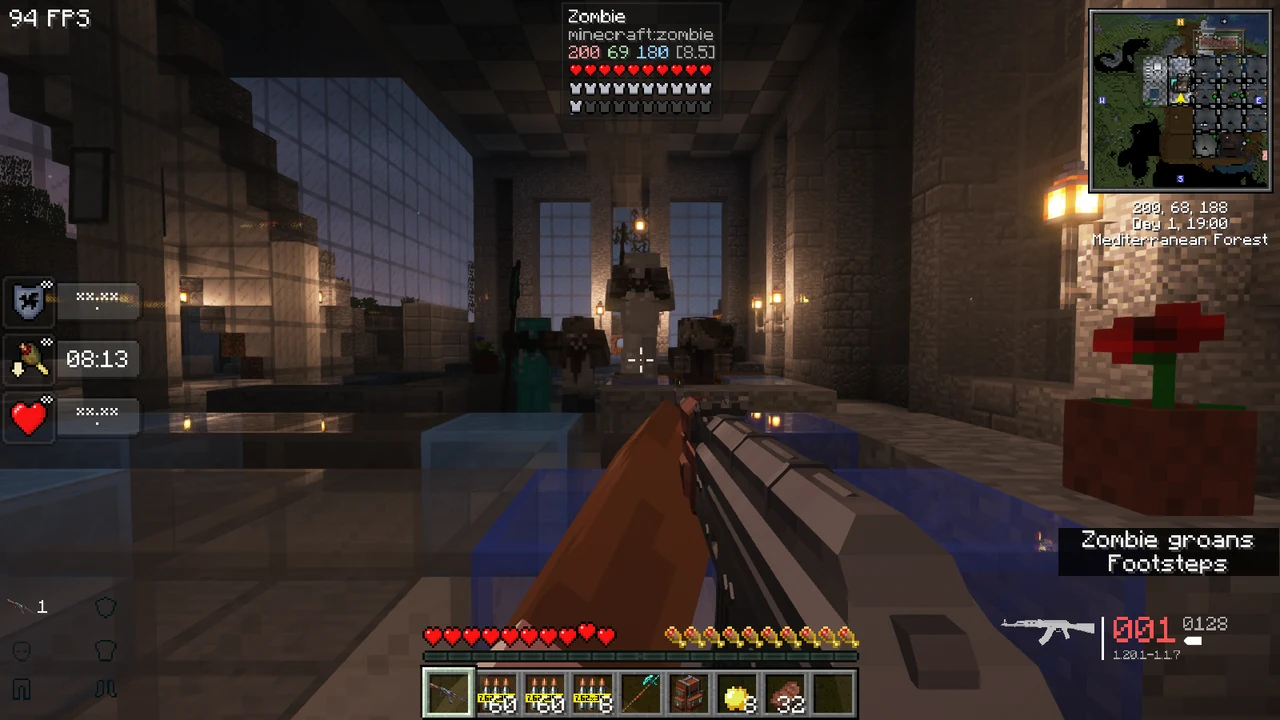
Midnight Sieges and Barricade Architecture
As the days progress, nighttime transforms from a standard visibility drop into an active siege. During horde nights and blood moon cycles, sleeping in a bed is disabled, forcing survivors to defend their shelters under continuous assault. Standard wooden doors and glass windows will not survive coordinated pressure from mutated infected.
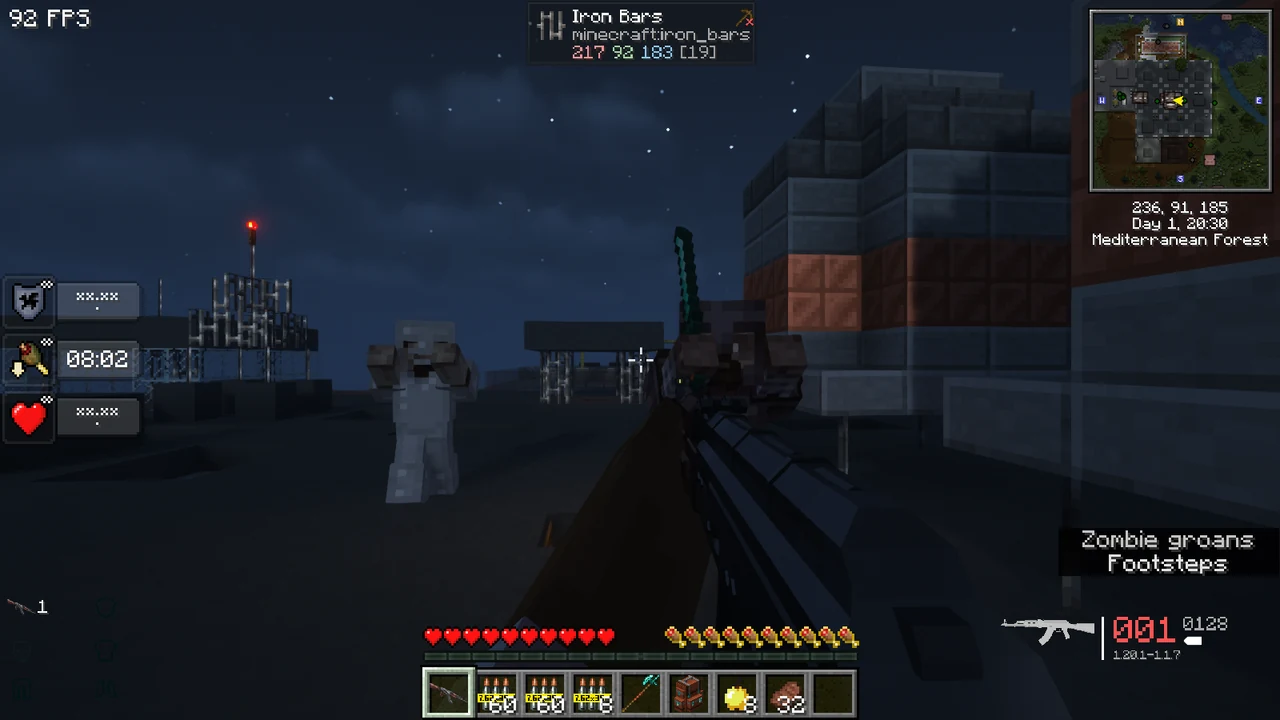
Effective defense relies on multi-layered architectural zoning. Rooftops and upper floors serve as the primary defensive retreat, forcing zombies through narrow choke points such as reinforced iron bar gates, barbed wire entanglements, and single-file staircases. Elevated firing positions allow you to pick off armored spearheads before they reach structural supports.
Scavenging Logistics and Resource Management
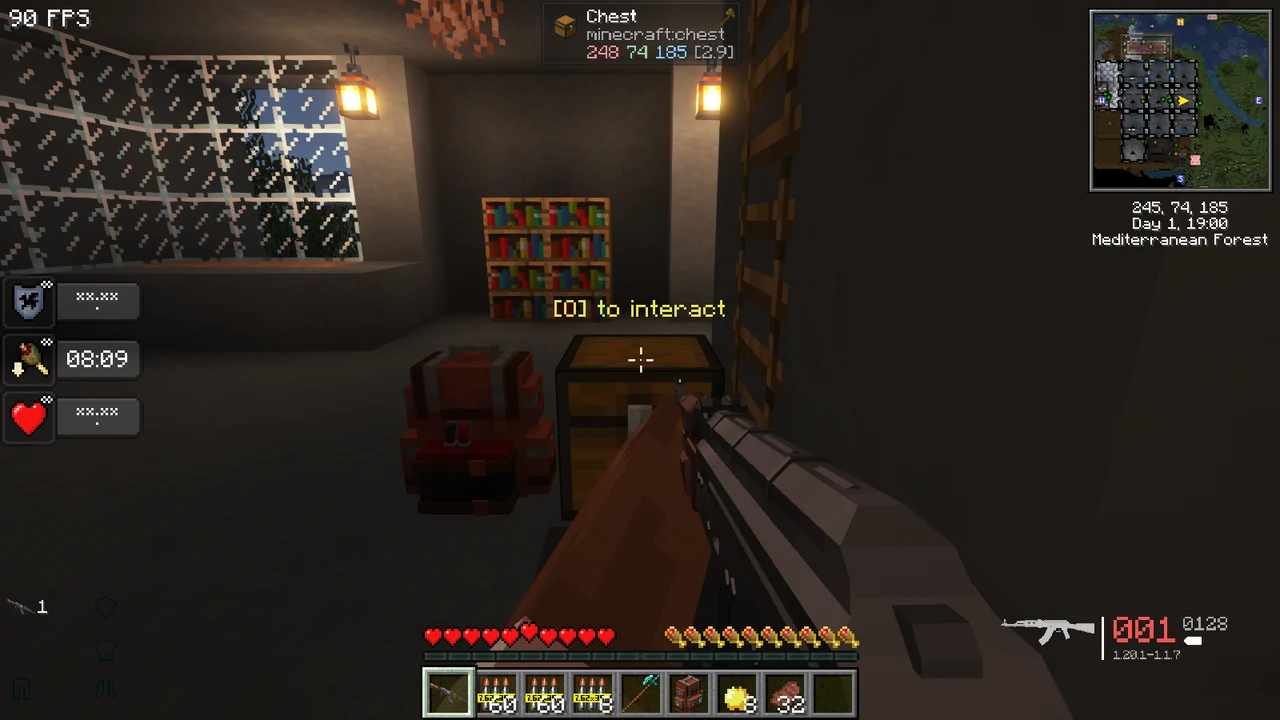
Ammunition crafting is not trivial. Machining brass casings, refining lead, and mixing gunpowder requires steady material throughput. Abandoned apartments, office complexes, and retail stores scattered across the city hold valuable pre-war caches of canned food, first-aid medical supplies, military ammo boxes, and firearm components.
Hauling these heavy supplies back to your primary base requires specialized carrying capacity. The inclusion of Sophisticated Backpacks allows survivors to craft tiered backpacks equipped with feeding upgrades, auto-pickup filters, and tool swaps. Upgrading to iron and diamond backpacks early ensures that lengthy salvage excursions yield maximum resource returns without forcing repeated dangerous round-trips through hostile streets.
System Performance and Configuration Tuning
Zombie Invade 100 Days bundles 143 mods on Minecraft 1.20.1 Forge, combining complex world generation from Lost Cities with physics assets and gun entity logic from TAC:Z. Because dense urban city blocks contain thousands of tile entities and complex window geometry, memory allocation and render distance settings have a direct impact on frame stability.
Allocating 8 GB of system RAM ensures smooth chunk loading while navigating dense metropolitan sectors. For players encountering language discrepancies upon first boot, verify that the active language in options is set to English US, and ensure that keybindings for TAC:Z gun inspection (default N) and backpack interaction do not overlap with default controls.
Measured Performance across Gameplay Scenarios on Minecraft 1.20.1 Forge
| Gameplay Scenario | Resolution | Render Distance | Average Frame Rate | RAM Usage |
|---|---|---|---|---|
| Skyscraper Rooftop Exploration | 1920x1080 | 12 Chunks | 95 to 110 FPS | 5.8 GB |
| Indoor Colonnade Firefight | 1920x1080 | 12 Chunks | 85 to 95 FPS | 6.2 GB |
| Midnight Rooftop Horde Siege | 1920x1080 | 12 Chunks | 75 to 88 FPS | 6.7 GB |
| High-Density Street Navigation | 1920x1080 | 12 Chunks | 70 to 82 FPS | 7.1 GB |
The Final Verdict: Who Should Take the 100-Day Challenge?
Zombie Invade 100 Days succeeds where many apocalypse packs falter by giving the infection a distinct sense of urgency and progression. Rather than offering static difficulty that quickly becomes routine, the 100-day countdown forces you to treat every daylight hour as an investment toward surviving the next mutation wave.
The combination of TAC:Z realistic ballistics, vertical Lost Cities salvage, and the constant threat of evolving horde tactics creates a tense, rewarding survival loop. Whether tackled solo as a test of endurance or cooperatively with friends dividing scavenging and defensive duties, this modpack stands out as one of the most compelling post-apocalyptic experiences available on Minecraft 1.20.1 Forge.
Test setup
- game Version
- 1.20.1
- loader
- Forge 47.4.10
- pack Version
- 2.3
- memory Allocated
- 8 GB
- cpu
- Intel Core i7-10700K
- gpu
- NVIDIA GeForce GTX 1660 SUPER
- render Distance
- 12 chunks
Official downloads
Open the creator’s page to get the modpack and its version-specific installation instructions.