A bucket is one of the most versatile utility tools in Minecraft, allowing players to transport liquids, create renewable water supplies, collect dairy milk, capture aquatic mobs, and power smelting furnaces. Crafting one requires 3 iron ingots, which translates to 3 raw iron mined underground and smelted in a furnace.


Bucket Crafting Recipe and Iron Cost
Open a standard 3x3 crafting table to make a bucket. Position three iron ingots in a V-shape across the grid: place one ingot in the middle-left slot (slot 4), one in the bottom-center slot (slot 8), and one in the middle-right slot (slot 6). You can also shift the entire pattern up by one row, placing ingots in the top-left, middle-center, and top-right slots.

| Ingredient | Quantity | Raw Resource Requirement |
|---|---|---|
| Iron Ingot | 3 | 3 Raw Iron (smelted in furnace or blast furnace) |
| Crafting Table | 1 (reusable) | 4 Wooden Planks (1 Wood Log) |
The bucket recipe cannot be crafted in the player's 2x2 survival inventory because the V-formation spans three columns. To compute full iron ingot requirements for larger building projects, consult our MC Toolbox Crafting Guide.
Inventory Stack Limits: Empty vs Filled Buckets
An empty bucket stacks up to 16 items per inventory or container slot. Once a bucket collects any liquid, block, or mob, its stack size drops to 1.
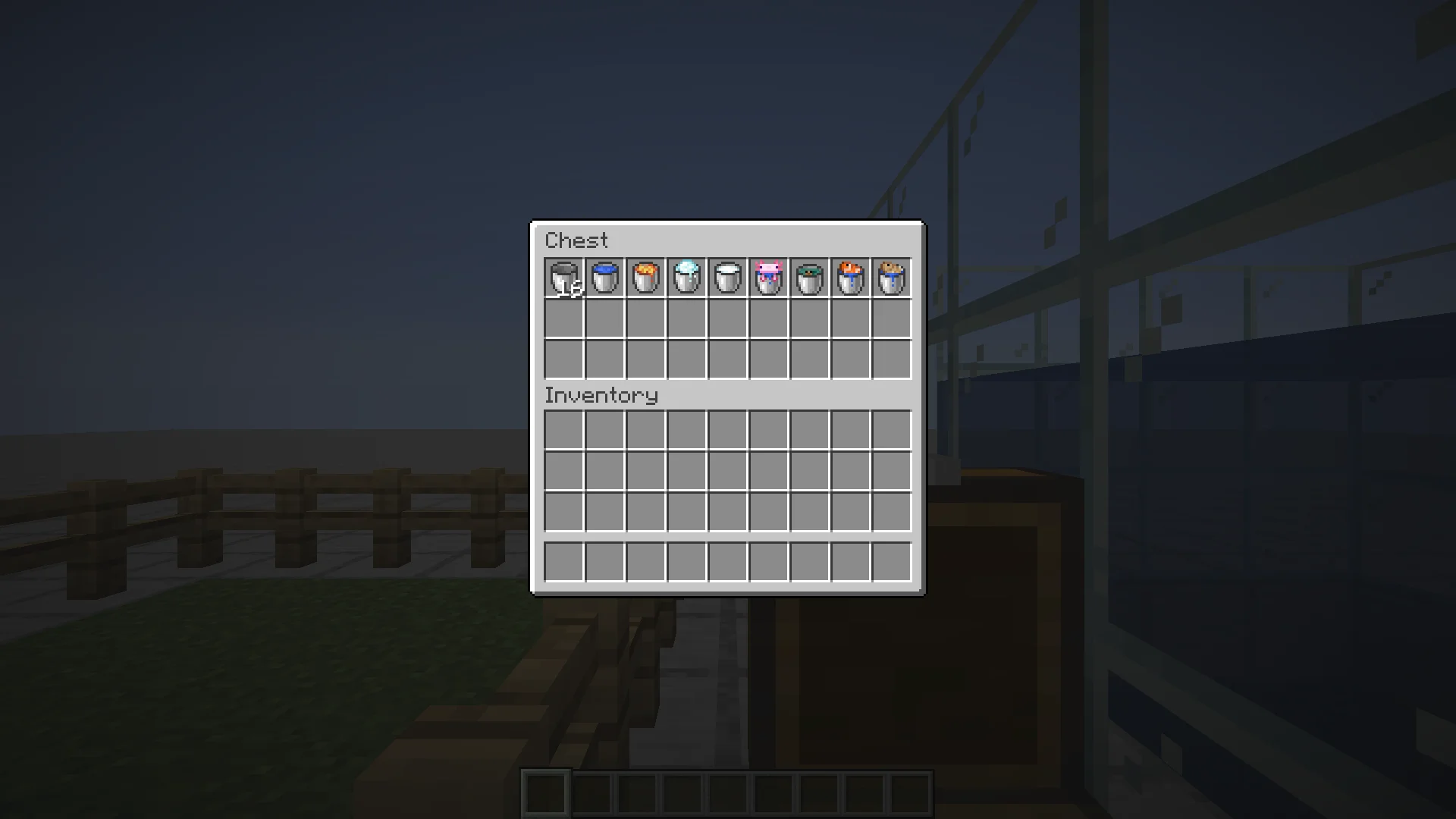
Filled buckets never stack. When transporting large amounts of fluids, keep a stack of 16 empty buckets in your inventory and fill them at your destination rather than carrying pre-filled buckets.
| Bucket Type | Max Stack Size | Primary Function |
|---|---|---|
| Empty Bucket | 16 | Collects liquids, powder snow, milk, and aquatic mobs |
| Water Bucket | 1 | Places water source block, hydrates farmland, extinguishes fire |
| Lava Bucket | 1 | Places lava source block, fuels furnaces for 100 smelts |
| Powder Snow Bucket | 1 | Places freeze hazard block that supports leather boots |
| Milk Bucket | 1 | Clears all status effects, ingredient for cake |
| Mob Buckets (Fish, Axolotl, Tadpole) | 1 | Transports living aquatic entities without despawning |
How to Make an Infinite Water Source
Water physics in Minecraft allows players to generate an endless supply of water source blocks using only two water buckets. When an empty space has at least two horizontally adjacent source blocks and a solid block directly beneath it, the game converts that space into a new water source block.
Two layouts are commonly used:
- 2x2 Square Well: Dig a 2x2 hole that is 1 block deep. Empty one water bucket into the northwest corner, then empty the second bucket into the southeast corner. The water meets in the center and fills the remaining two corners into permanent source blocks. You can draw water continuously from any corner without depleting the pool.
- 1x3 Trench: Dig a 1x3 trench that is 1 block deep. Place one water bucket at the left end and one water bucket at the right end. The center block becomes a renewed source block. Drawing water only from the middle block allows the outer source blocks to refill it instantly.
Lava Bucket as Furnace Fuel
A bucket of lava is one of the longest-lasting fuel sources in Minecraft. When placed in the fuel slot of a standard furnace, smoker, or blast furnace, a lava bucket burns for 20,000 game ticks, which equals exactly 1,000.0 seconds (16 minutes and 40 seconds).

Because a standard furnace requires 200 game ticks (10.0 seconds) to cook or smelt one item, a single lava bucket smelts exactly 100 items:
- Standard Furnace: 20,000 game ticks / 200 ticks per item = 100 items smelted.
- Blast Furnace / Smoker: These cook twice as fast but also burn fuel twice as fast, so one lava bucket still handles 100 items. A smoker only accepts food.
- Bucket Recovery: The empty iron bucket is not consumed by the fire. It remains sitting in the fuel slot and can be retrieved manually or drawn out automatically into a collection chest with a bottom hopper.
To compare lava bucket burn duration with coal, charcoal, blaze rods, and dried kelp blocks, check the MC Toolbox Furnace Fuel Calculator.
Handling Water, Lava, and Powder Snow
A bucket can gather and deploy three distinct terrain elements in Minecraft: water, lava, and powder snow. Each exhibits specific behavioral limits.
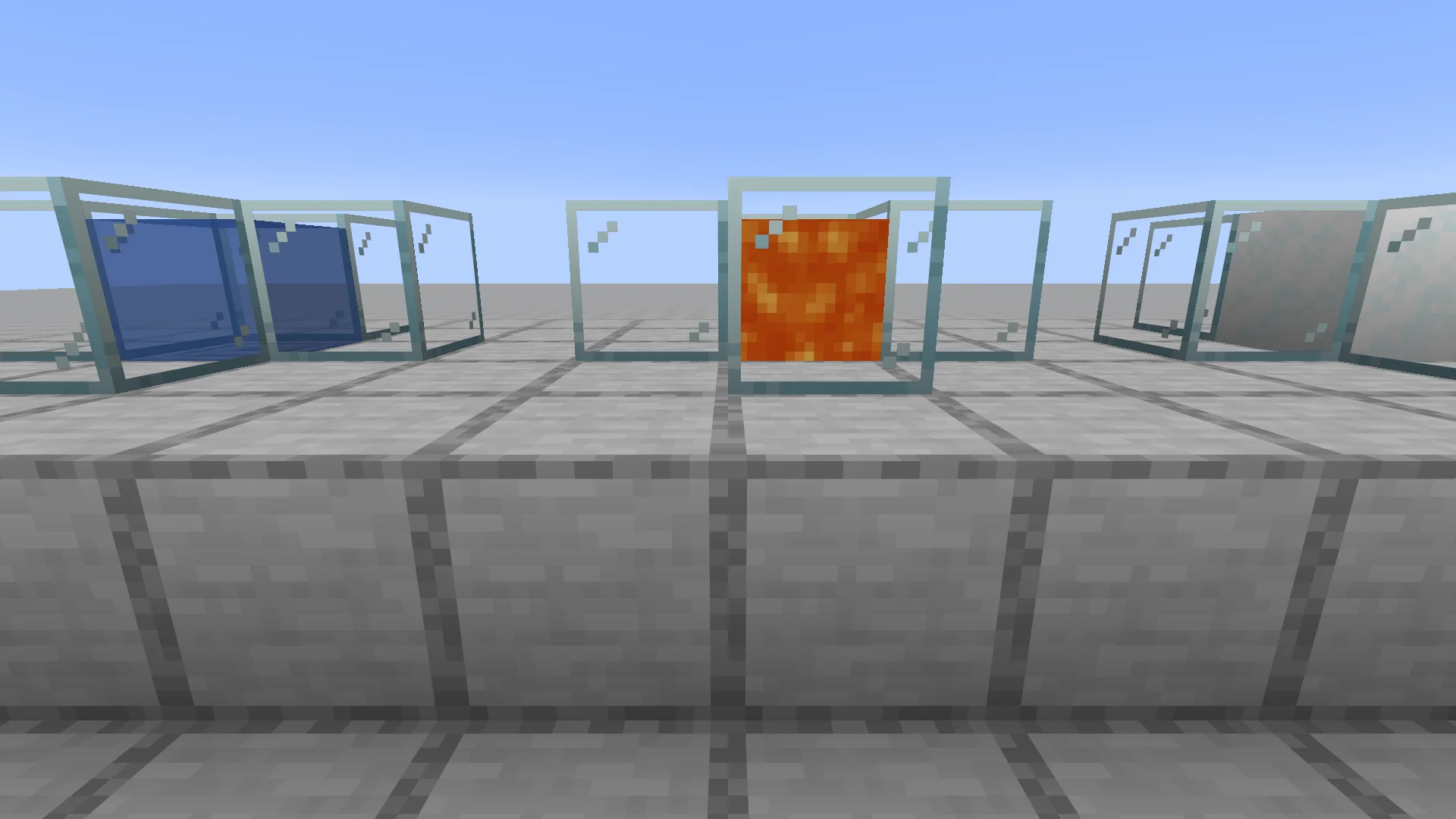
Fluid and block mechanics differ between dimensions:
- Water: Spreads up to 7 blocks away from the source block in the Overworld (reaching 8 blocks total). Attempting to place water in the Nether causes it to flash into steam with an audible hiss, leaving the bucket empty.
- Lava: Spreads up to 3 blocks away from the source block in the Overworld (4 blocks total reach). In the Nether, lava flows faster (updating every 10 ticks instead of 30) and spreads up to 7 blocks horizontally (8 blocks total reach). Flowing water meeting stationary lava creates obsidian, while flowing lava meeting water creates cobblestone or stone.
- Powder Snow: Gathered from snowy mountain groves or filled cauldrons. Unlike water, powder snow can be placed in the Nether. Living entities sink into powder snow blocks and begin shivering; after 140 game ticks (7.0 seconds), entities take 1 point (half a heart) of freezing damage every 40 ticks (2.0 seconds). Wearing leather boots prevents sinking and cancels the freeze effect.
Milking Animals and Scooping Aquatic Mobs
Buckets interact directly with friendly mobs to collect food items and transport living creatures safely over long distances.
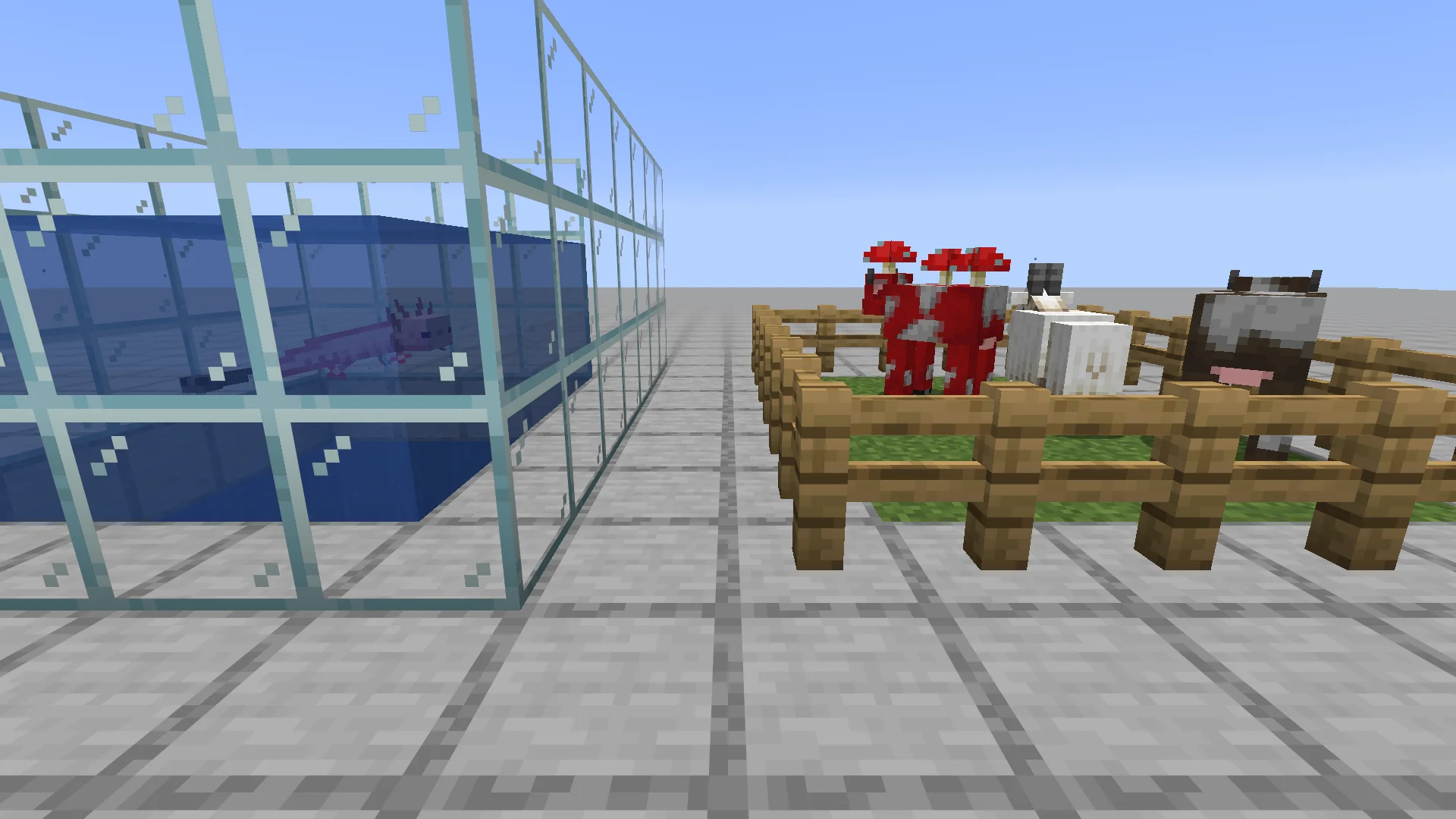
Milking and mob gathering follow distinct rules:
- Dairy Milking: Right-clicking a cow, goat, or mooshroom with an empty bucket fills it with milk. Drinking a milk bucket requires 32 game ticks (1.60 seconds) and immediately removes every active status effect, including beneficial potion buffs, Poison, Wither, Mining Fatigue, and Bad Omen. Milking cows and mooshrooms has no cooldown, providing an unlimited status cleanser.
- Mooshroom Interaction: Right-clicking a red or brown mooshroom with an empty bucket yields milk, while right-clicking with a wooden bowl yields mushroom stew. Feeding a brown mooshroom a small flower before using a bowl yields suspicious stew.
- Aquatic Mob Bucketing: Right-clicking small aquatic mobs with a water bucket scoops both the mob and water into your inventory. In Minecraft 26.3, this works on six entities: cod, salmon, pufferfish, tropical fish, axolotls, and tadpoles. Placing the mob back into the world preserves its size, health, color variant, and custom name tag, and prevents naturally despawning mobs from vanishing.
FAQ
Can you craft a bucket in a 2x2 player inventory grid?
No. A bucket requires three iron ingots arranged in a V-shape across at least two rows and three columns, which cannot fit inside the 2x2 player crafting grid. You must use a standard 3x3 crafting table.
Why do empty buckets stack to 16 but a water bucket does not stack?
Minecraft limits all filled fluid and entity buckets to a maximum stack size of 1 to preserve individual block and entity data. Empty buckets do not carry state, allowing them to stack up to 16 in a single inventory slot.
Does a furnace destroy the bucket when burning lava fuel?
No. When a lava bucket is placed in the fuel slot of a furnace, smoker, or blast furnace, the lava burns and leaves an empty iron bucket behind in the fuel slot. You can retrieve it manually or extract it using a hopper connected to the bottom of the furnace.
Can you place water in the Nether using a water bucket?
No. Using a water bucket in the Nether causes the water to evaporate instantly with a hiss and steam particles, leaving you with an empty bucket. To place a cold block in the Nether, you can use a powder snow bucket instead.