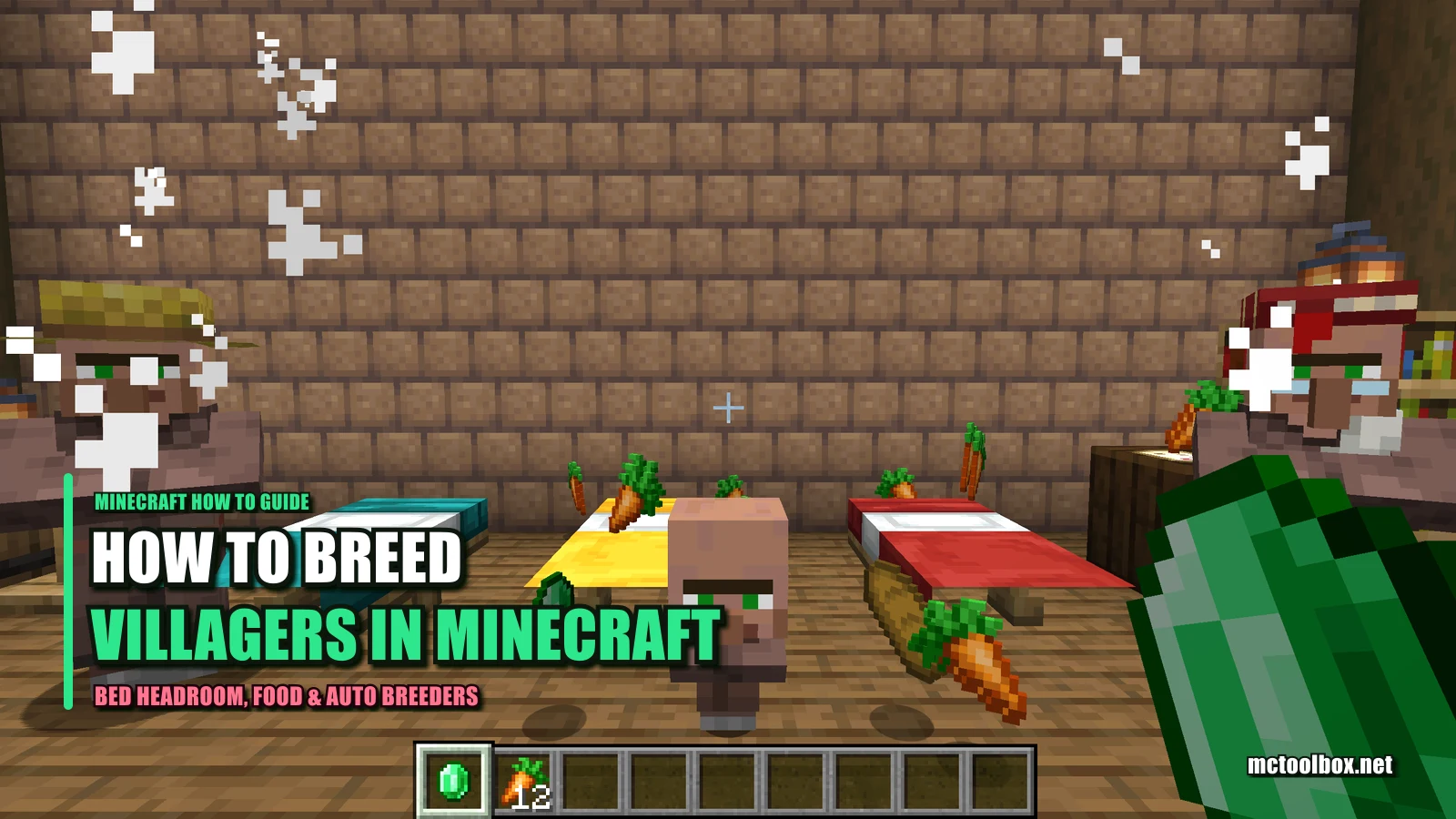
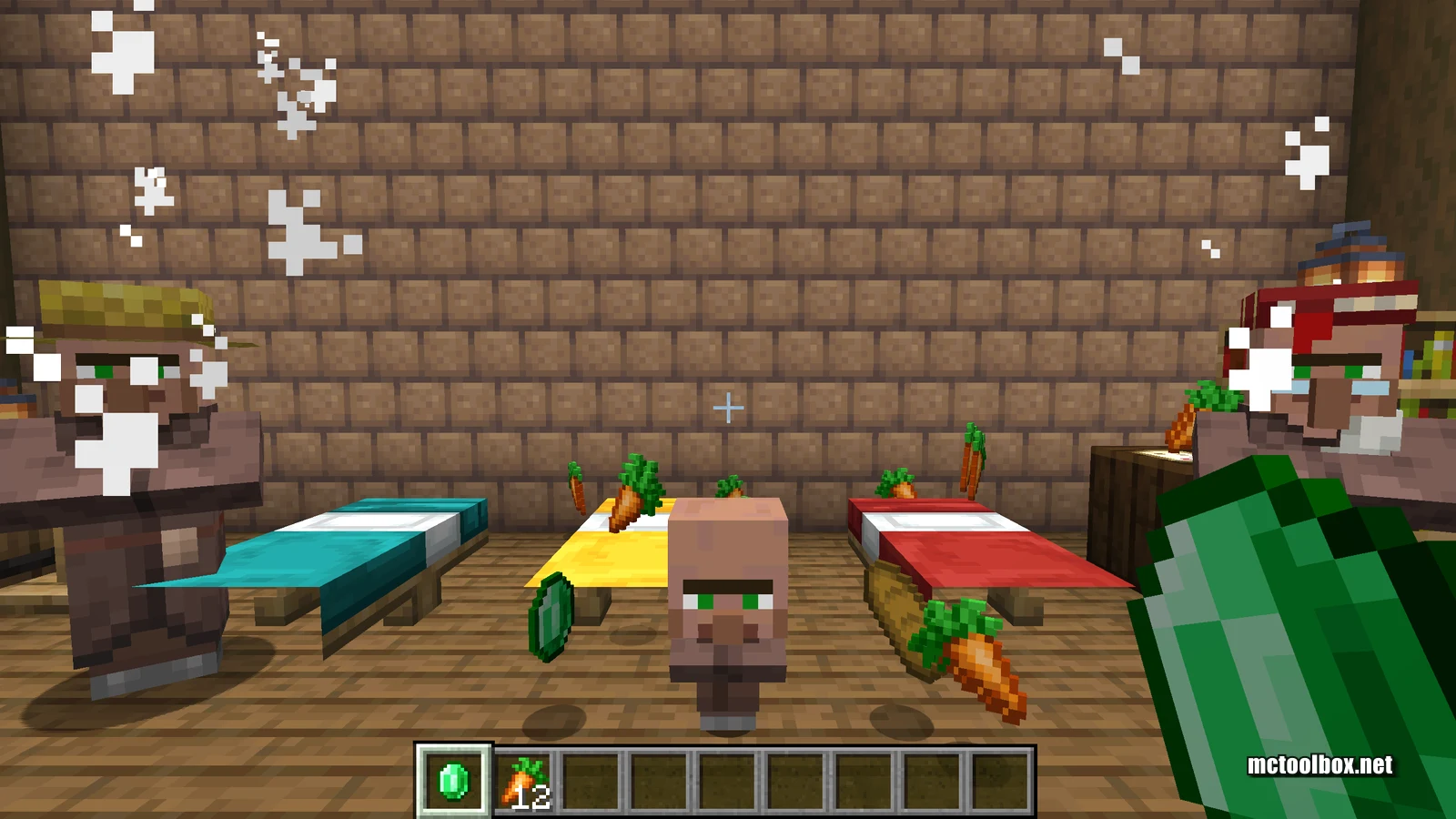
To breed villagers, bring two adults together, give each enough food and provide an accessible unclaimed bed for the baby. A three-bed room is a simple starting setup.
Once both villagers enter love mode, red heart particles float above them, and a newborn baby villager spawns within seconds. Villagers do not require player interaction to mate if food is already present in their internal inventories. Use these mechanics to expand trade halls, unlock enchanted book discounts, and automate emerald production.
The 3 Non-Negotiable Breeding Requirements
Before throwing food or building enclosures, verify that your setup satisfies all three core rules:
- Two Adult Villagers: Both villagers must be adults. Nitwits (green-robed villagers) and unemployed villagers can breed just as effectively as villagers with established professions.
- Extra Unclaimed Beds with Headroom: A village population expands only when unclaimed beds exist. For two parents to produce one baby, you need at least 3 beds total (2 for the parents and 1 extra for the newborn). Furthermore, there must be at least two blocks of clear air space directly above each bed mattress so the baby can jump on it.
- Food for Willingness: Villagers must become willing to breed. Each villager consumes food from its hidden 8-slot inventory to enter love mode.
| Eligible Food Item | Minimum Quantity Per Villager | Key Advantage |
|---|---|---|
| Bread | 3 loaves | Fastest manual feeding; easily crafted from 3 wheat |
| Carrots | 12 carrots | Best for automated farms; no crafting required and zero poisonous byproduct |
| Potatoes | 12 potatoes | Reliable crop; poisonous potatoes are ignored by villager inventories |
| Beetroots | 12 beetroots | Alternative crop; seeds can slowly clog automated farmer inventories |
Stocking food rations to trigger villager willingness
Villagers possess an internal 8-slot inventory that players cannot open directly. They use these inventory slots to carry crops, seeds, and bread.
How to feed villagers manually
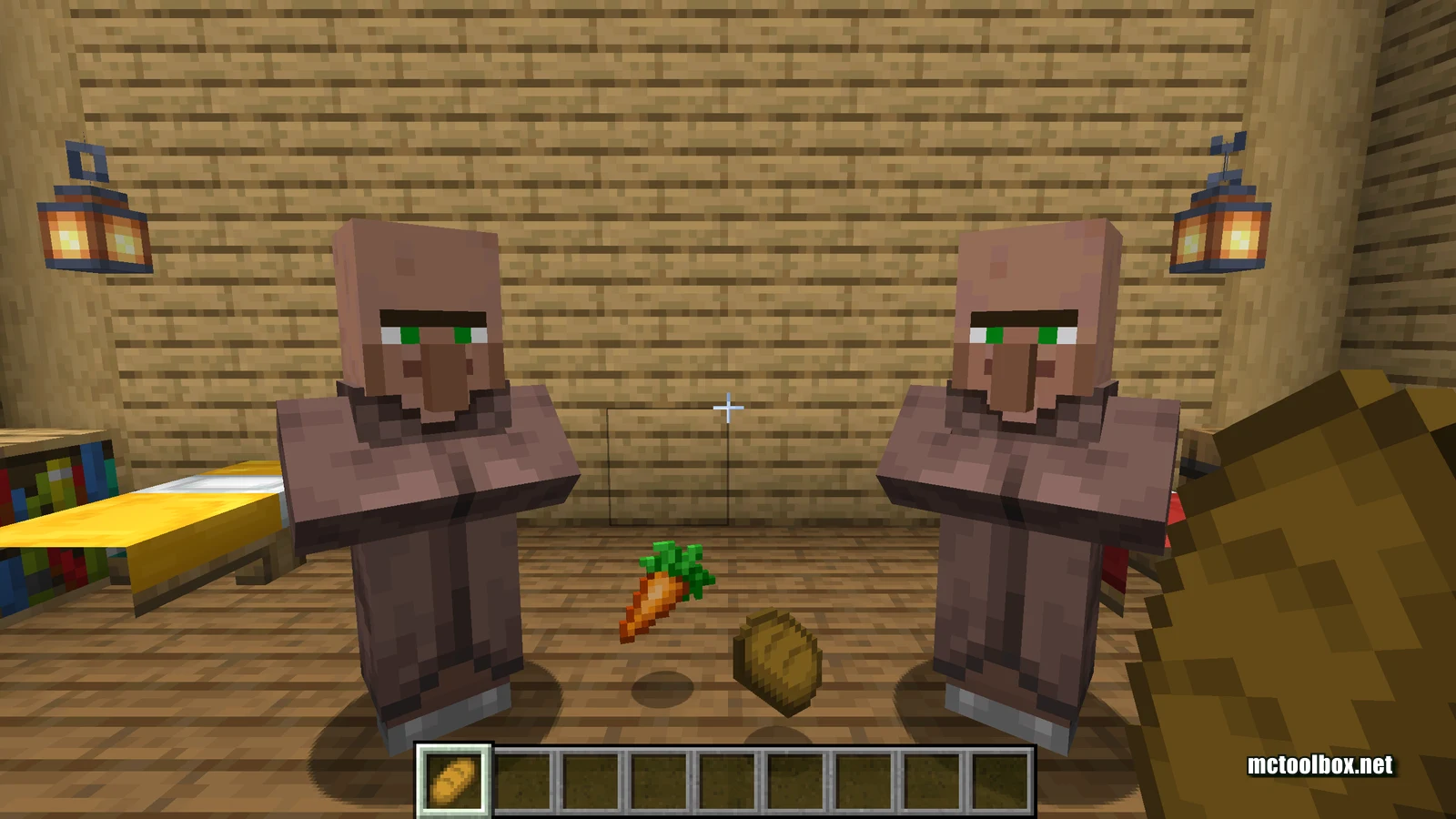
- Stand close to your two breeding villagers inside their enclosed pen or room.
- Select bread or carrots in your hotbar.
- Press your drop key (default Q) to toss the food items onto the floor between the two villagers.
- The villagers will walk toward the dropped items and pick them up automatically.
Villagers also share surplus food autonomously. If one villager holds plenty of carrots while the partner has none, the wealthy villager will actively throw food to the hungry one until both have enough to enter love mode.
Heart particles and newborn baby villager spawns
When both adult villagers possess enough food and sense an available unclaimed bed within the Java search range (48 blocks), they enter love mode simultaneously.
The breeding cycle and cooldown
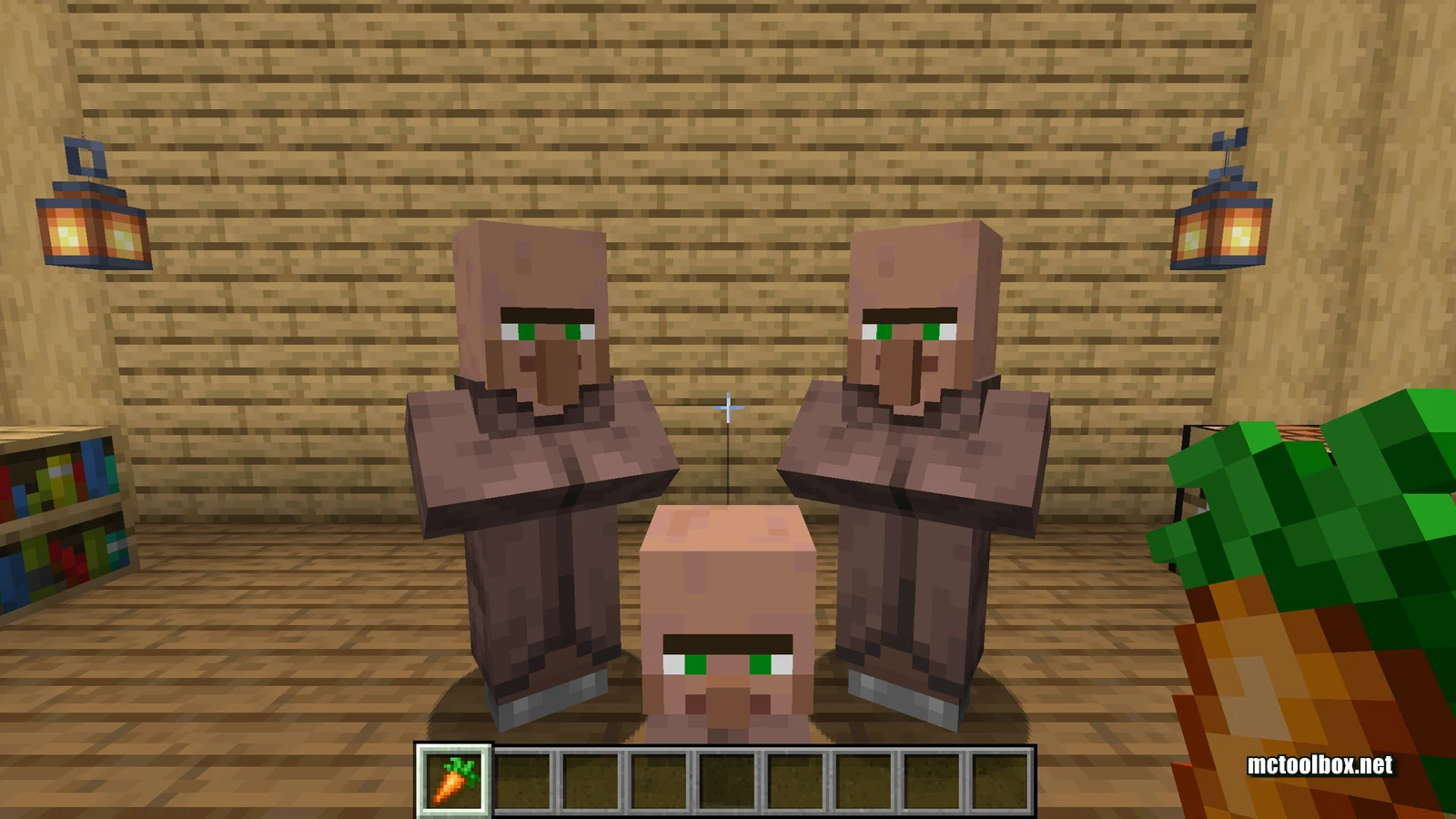
- Heart particles: Vibrant red heart particles appear over both parents as they face each other.
- Baby villager spawn: After the Java breeding interaction runs for about 14 seconds, a baby villager appears between the parents. In Java 26.x, the baby has a 50% chance to use the local biome outfit and a 25% chance to use each parent’s outfit.
- Breeding cooldown: After mating, both parents consume the food from their inventories and enter a 5-minute cooldown during which they cannot breed again.
- Baby growth time: A baby villager takes exactly 20 minutes (one full Minecraft in-game day) to mature into an adult villager. Feeding baby villagers does not accelerate their growth.
Bed claiming mechanics and the two-block headroom rule
Bed placement is the single most common reason villager breeders fail. Villagers do not merely need beds; they must validate that the beds are pathfindable and have sufficient vertical clearance.
Why beds need clear access
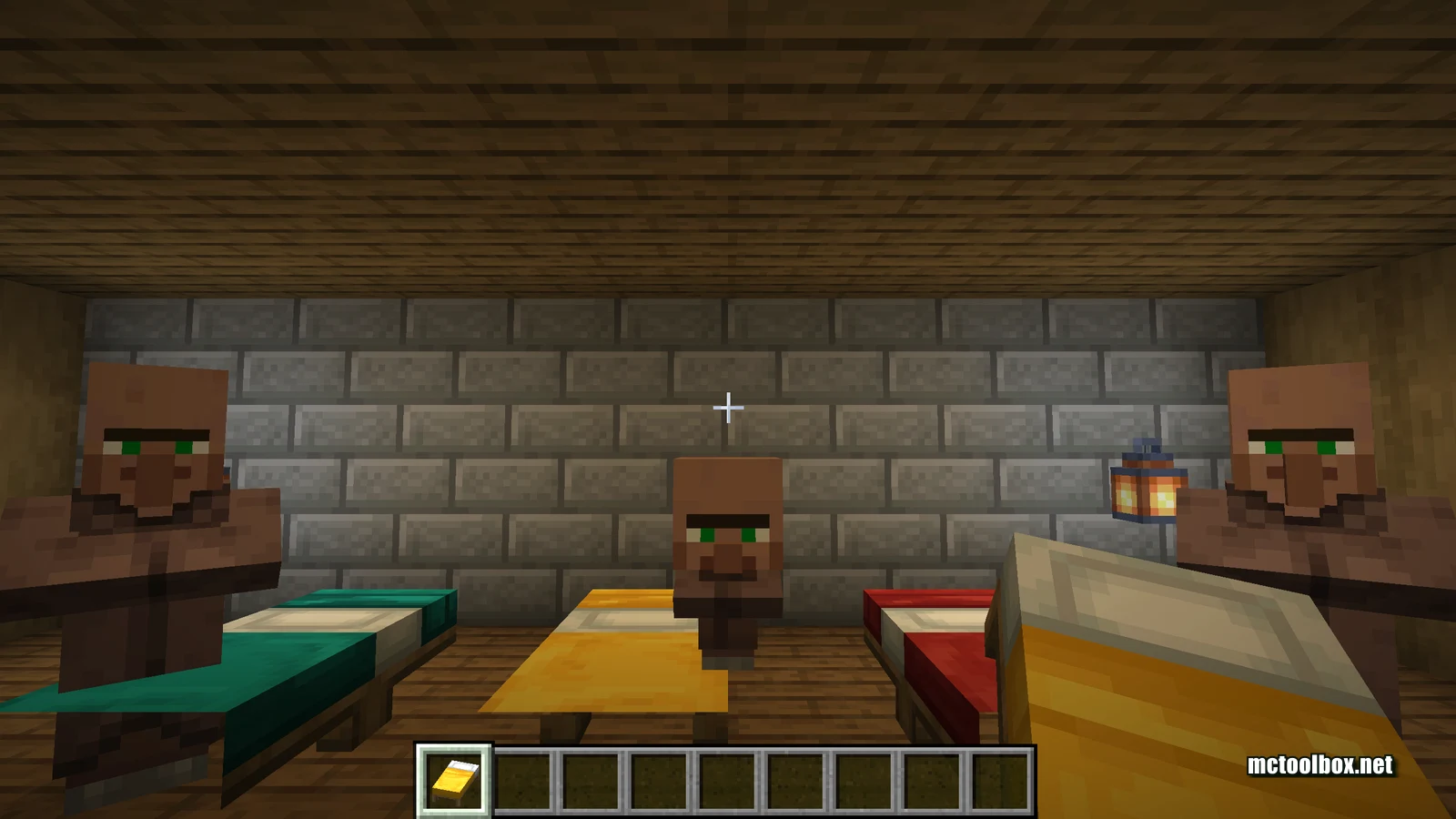
Minecraft requires baby villagers to be able to jump on beds as part of their playtime AI behavior. For a bed to be recognized as valid by the breeding algorithm:
- There must be at least two full blocks of open air directly above the top surface of the bed (meaning a minimum ceiling height of 3 blocks above the floor).
- Do not hang lanterns, place torches, install half-slabs, or attach trapdoors to the ceiling directly above the bed mattress. Keep these spaces clear in a simple breeder so the parents can find a usable path to the beds.
- Villagers must be able to pathfind to the bed pillow. While villagers do not need to sleep in the bed to breed, they must perceive a path to it.
Troubleshooting: Why Are Villagers Emitting Angry Storm Clouds?
If your villagers emit grey storm clouds (smoke particles with lightning symbols) instead of producing a baby, the breeding ritual failed. Here is how to diagnose and fix the cause:
| Symptom | Root Cause | Exact Fix |
|---|---|---|
| Angry storm clouds after hearts | No valid unclaimed beds available | Add more beds to the room. Every existing villager already claimed a bed; add a 3rd, 4th, or 5th bed for newborns. |
| Angry storm clouds after hearts | Headroom above bed is obstructed | Raise your ceiling to at least 3 blocks high. Remove lanterns, chains, or slabs directly over the bed surface. |
| Villagers ignore food entirely | Gamerule minecraft:mob_griefing is set to false | Execute /gamerule minecraft:mob_griefing true. If mob griefing is disabled, villagers cannot pick up items from the floor. |
| Hearts appear on only one villager | Only one villager has sufficient food | Throw an extra stack of bread or carrots so both adults reach full willingness. |
| Villagers show no hearts at all | Recent breeding cooldown active | Wait at least 5 minutes for the adult breeding cooldown timer to expire. |
Automating the cycle with a dedicated farmer breeder
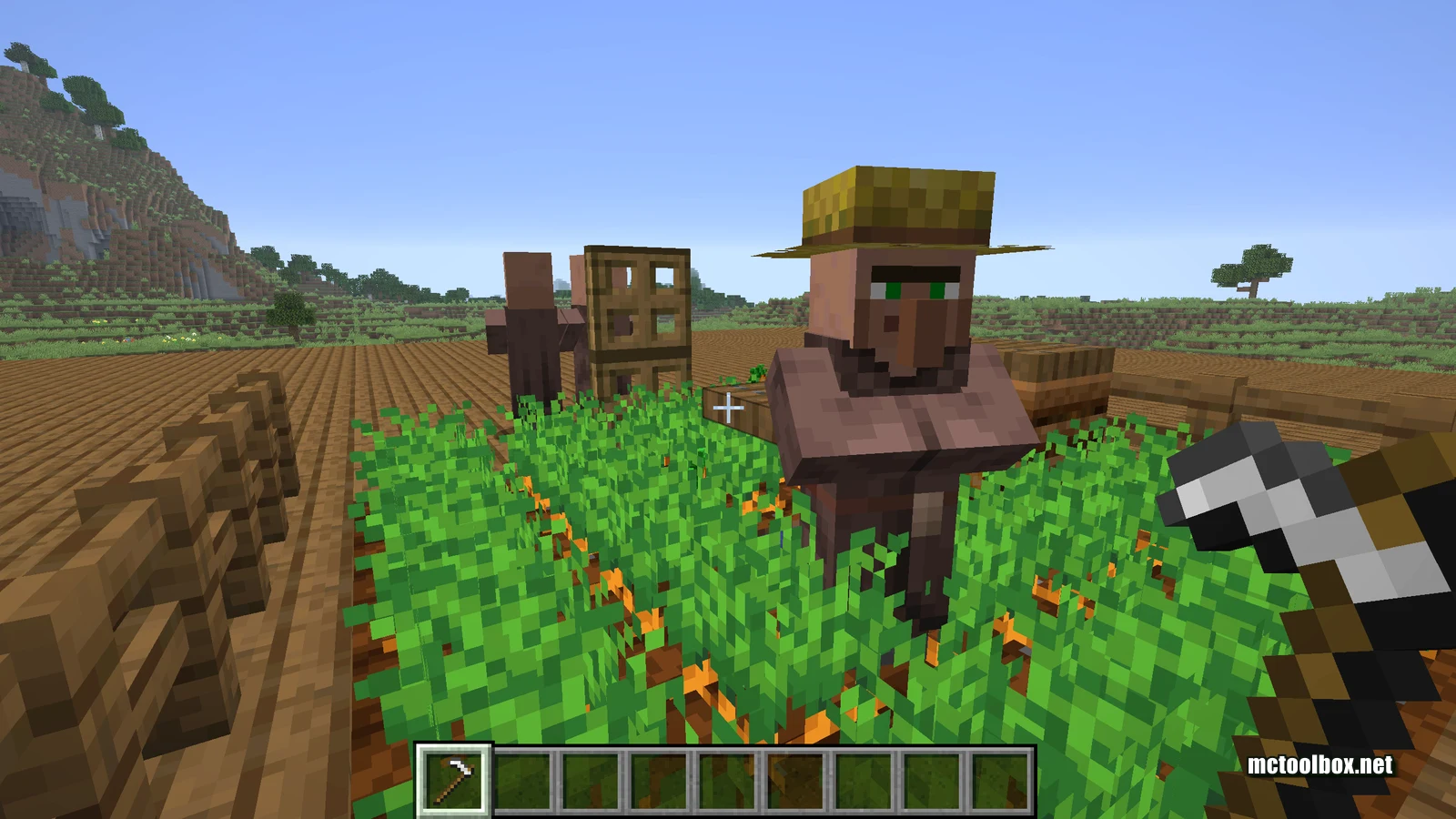
To supply a breeder with food, build a compact automated farmer breeder:
How the automated farm breeder operates
- Create a 9x9 farm plot: Hydrate the farmland with a central water source block covered by a top-half slab or trapdoor so crops do not drop into the water.
- Plant Carrots or Potatoes: Carrots are the optimal crop because they yield 2 to 5 carrots per mature harvest before replanting with no extra seeds to clog the farmer inventory. Avoid wheat because farmers will craft bread and fill their slots with seeds.
- Introduce a Farmer Villager: Place a Composter near the field. A villager will claim it and become a Farmer. Give the farmer 8 stacks of carrots to fill its inventory completely, ensuring it only plants and harvests carrots.
- Build the breeding holding chamber: Enclose two unemployed villagers in a 2x1 or 2x2 pod adjacent to the farm field. Separate the farmer from the breeding pair using two open trapdoors.
- Trapdoor crop sharing mechanic: The farmer attempts to throw surplus carrots to the two hungry villagers through the trapdoor gap. The food falls at their feet, they consume it, achieve willingness, and breed again after the cooldown when a bed is available.
Java Edition vs Bedrock Edition Differences
Keep these edition-specific quirks in mind when designing breeding facilities:
- Workstation requirement: Workstations are optional for breeding in both editions. In Bedrock, a village forms when a villager links to a bed.
- Bed linking mechanics: Keep beds close to the parents and provide a clear route with space above them. Java searches for a vacant home POI within 48 blocks; this is not a 48-by-16 detection box.
- Nitwit breeding: In both editions, green-robed nitwits can breed normally, but they can never claim a workstation profession or trade.
Advanced Mechanics, Drop Chutes & Console Reference
Take your villager infrastructure to maximum efficiency with these advanced survival principles:
Moving babies out of the breeder
In standard rooms, you must place one new bed for every baby you want to produce. However, if you place open trapdoors over a hole in the floor between the beds, baby villagers perceive the trapdoor as a solid block and pathfind toward the bed. They fall through the chute into a water stream that carries them at least 32 blocks away horizontally or into the Nether.
Move babies away from the breeding beds and prevent them from returning. A fixed 32-block move does not guarantee that a Java villager releases its bed; verify that the bed is available for the next birth.
Iron Golem spawn triggers
As your village expands, iron golems begin spawning to protect the villagers:
- Java Edition: At least 3 eligible villagers are needed for panic-based spawning, or 5 for gossip-based spawning. Recent sleep, nearby villagers, golem detection and cooldowns also affect success.
- Bedrock Edition: A village needs at least 10 villagers and 20 beds; all villagers must link to beds and at least 75% must have worked during the previous day. Valid spawn space is also required.
Helpful Villager Commands
| Purpose | Java Edition Console Command | Notes |
|---|---|---|
| Summon Plains Villager | Spawns an unemployed adult villager | |
| Summon Baby Villager | Spawns a baby with a full 20-minute growth timer | |
| Enable Mob Griefing | Mandatory for villagers to harvest and pick up crops | |
| Summon Librarian | Spawns an apprentice librarian for trade books |
Plan your village layouts and locate neighboring settlements using the interactive seed map, verify building recipes in our crafting recipes database, check trade discounts in our zombie villager curing guide, or generate custom trade items using the /give command generator.